/ Communication in Practice
Yahoo Finance / Principal Product Designer / Ongoing
Documentation
Writing and design
Leadership alignment
Adoption tracking
Coordination
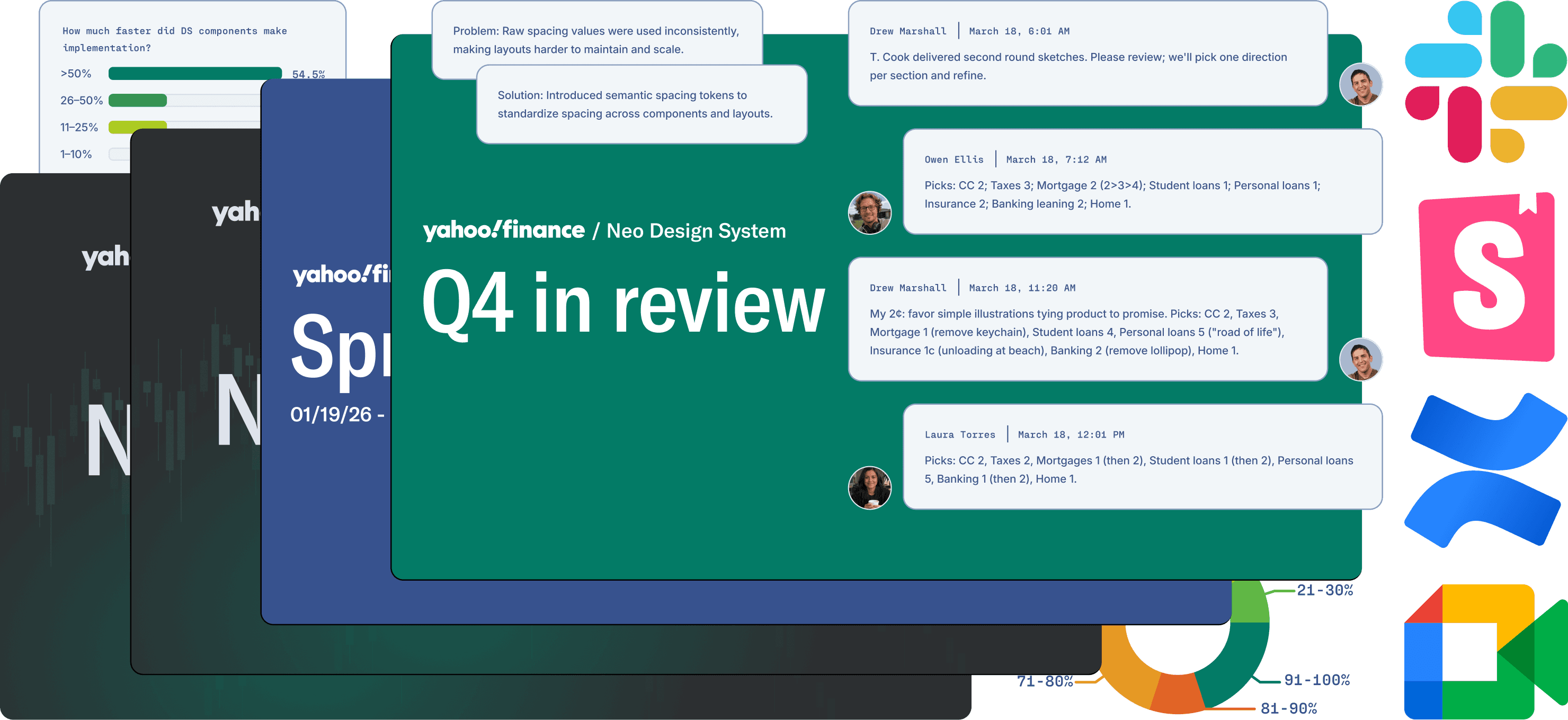
A design system built in public
Neo was never a finished thing handed to teams on a schedule. It was built while the product was shipping, which meant designers, engineers, product managers, and leadership all needed to understand what existed, what was coming, and what was safe to depend on. Often at the same time, often with different questions.
/ Communication in Practice
Yahoo Finance / Principal Product Designer / Ongoing
Documentation
Writing and design
Leadership alignment
Adoption tracking
Coordination
A design system built in public
Neo was never a finished thing handed to teams on a schedule. It was built while the product was shipping, which meant designers, engineers, product managers, and leadership all needed to understand what existed, what was coming, and what was safe to depend on. Often at the same time, often with different questions.
/ Communication in Practice
Yahoo Finance / Principal Product Designer / Ongoing
Documentation
Writing and design
Leadership alignment
Adoption tracking
Coordination
A design system built in public
Neo was never a finished thing handed to teams on a schedule. It was built while the product was shipping, which meant designers, engineers, product managers, and leadership all needed to understand what existed, what was coming, and what was safe to depend on. Often at the same time, often with different questions.
/ Communication in Practice
Yahoo Finance / Principal Product Designer / Ongoing
Documentation
Writing and design
Leadership alignment
Adoption tracking
Coordination
A design system built in public
Neo was never a finished thing handed to teams on a schedule. It was built while the product was shipping, which meant designers, engineers, product managers, and leadership all needed to understand what existed, what was coming, and what was safe to depend on. Often at the same time, often with different questions.
Communication is key
The communication cadence I built was the answer to that problem. Not a newsletter. Not a status report. A predictable rhythm that kept six squads informed and reduced the number of times anyone had to ask what the design system team was doing.
The quarterly review
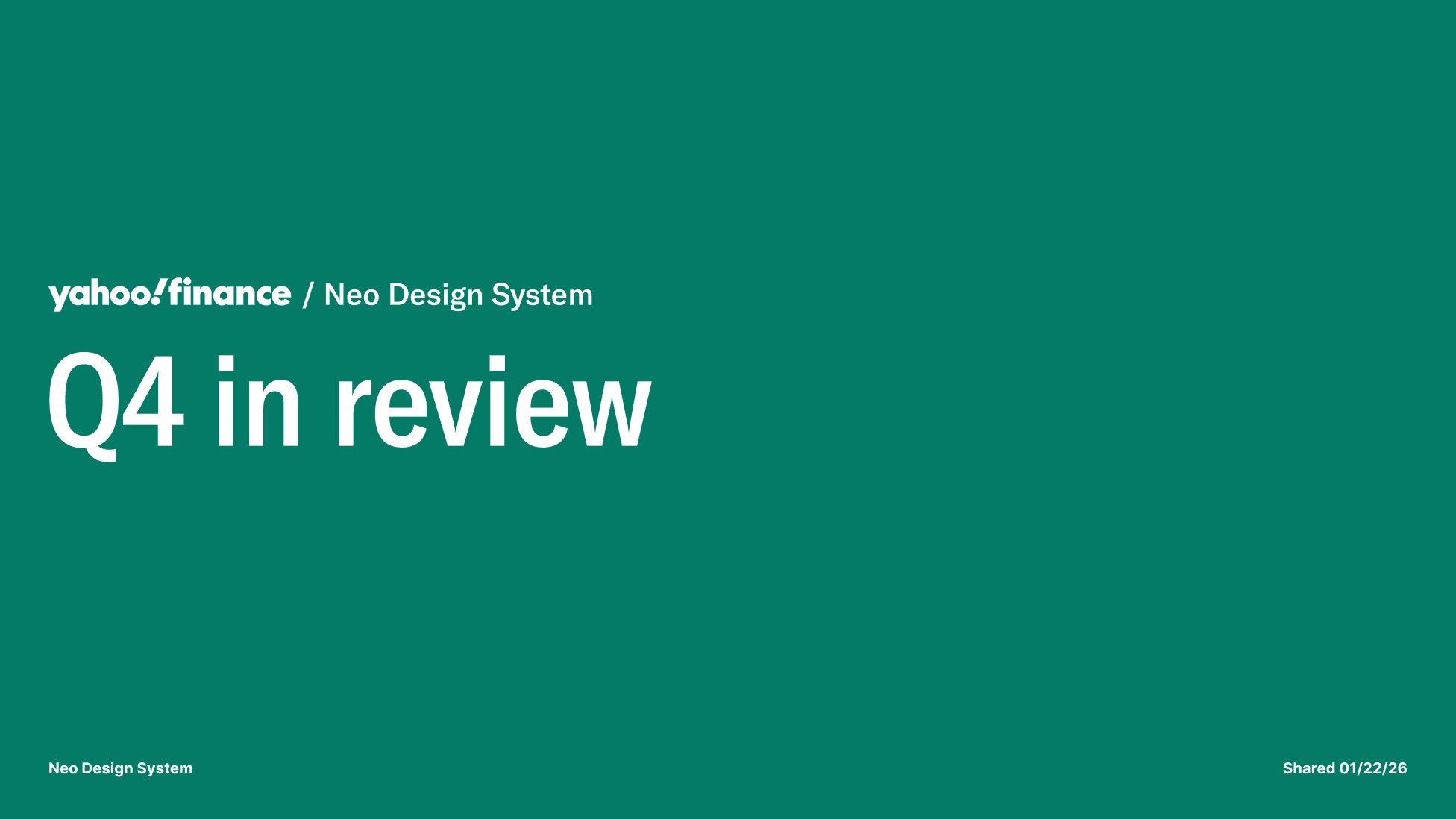
Every quarter I published a review covering four things: what the team had shipped, what the data showed about adoption and impact, feedback collected directly from designers, engineers, and product managers, and what was coming in the next cycle.
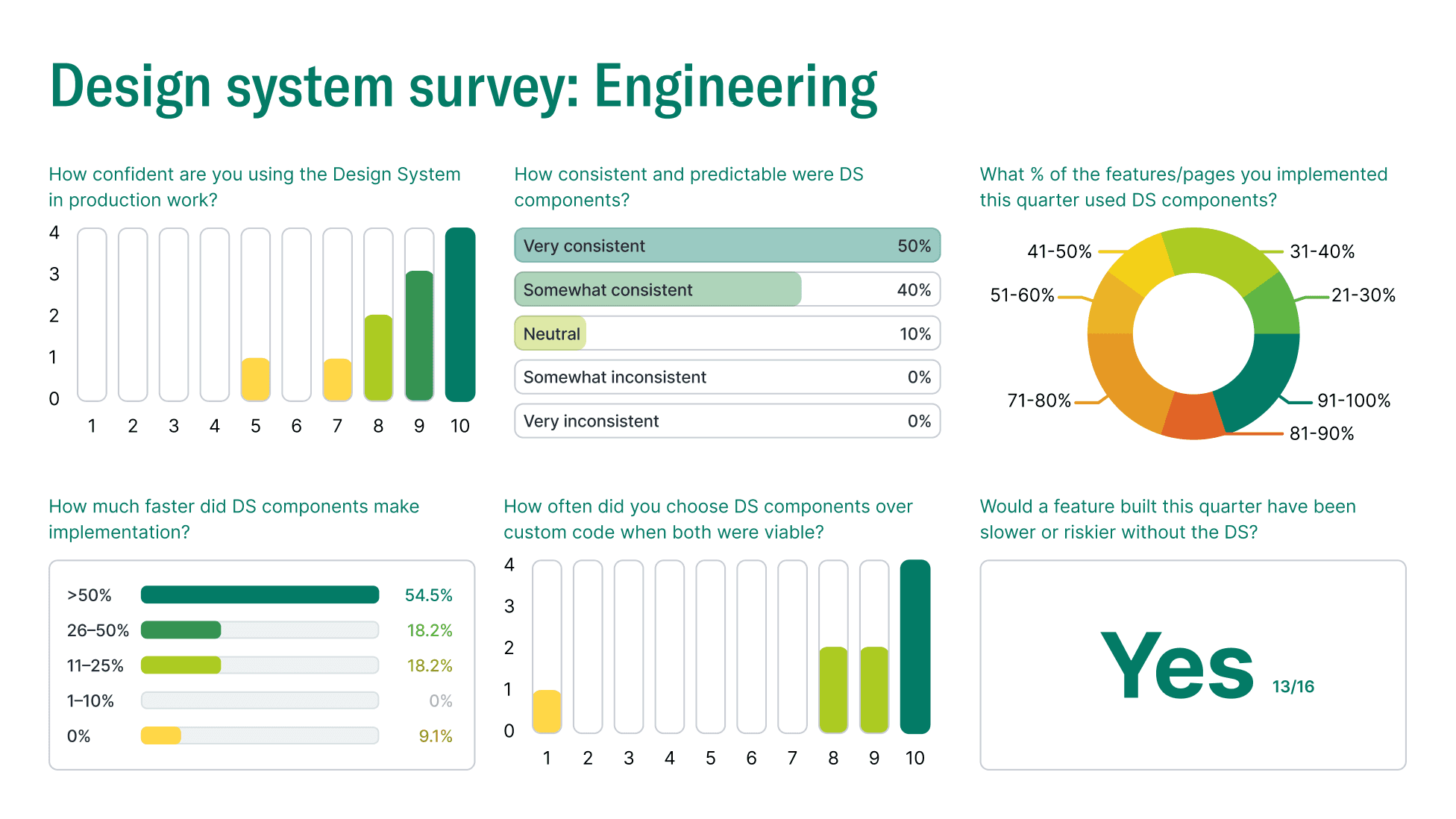
The 2025 Q4 review surveyed designers, engineers, and product managers. Every designer said they could get support without being blocked. 54.5% of engineers said the design system made implementation 50% or more faster. 81.8% said their work that quarter would have been slower or riskier without it. Those numbers didn't come from nowhere. They came from a team that knew what the system was doing because we told them, consistently, all year.
The quarterly review
Every quarter I published a review covering four things: what the team had shipped, what the data showed about adoption and impact, feedback collected directly from designers, engineers, and product managers, and what was coming in the next cycle.
The 2025 Q4 review surveyed designers, engineers, and product managers. Every designer said they could get support without being blocked. 54.5% of engineers said the design system made implementation 50% or more faster. 81.8% said their work that quarter would have been slower or riskier without it. Those numbers didn't come from nowhere. They came from a team that knew what the system was doing because we told them, consistently, all year.
The sprint update
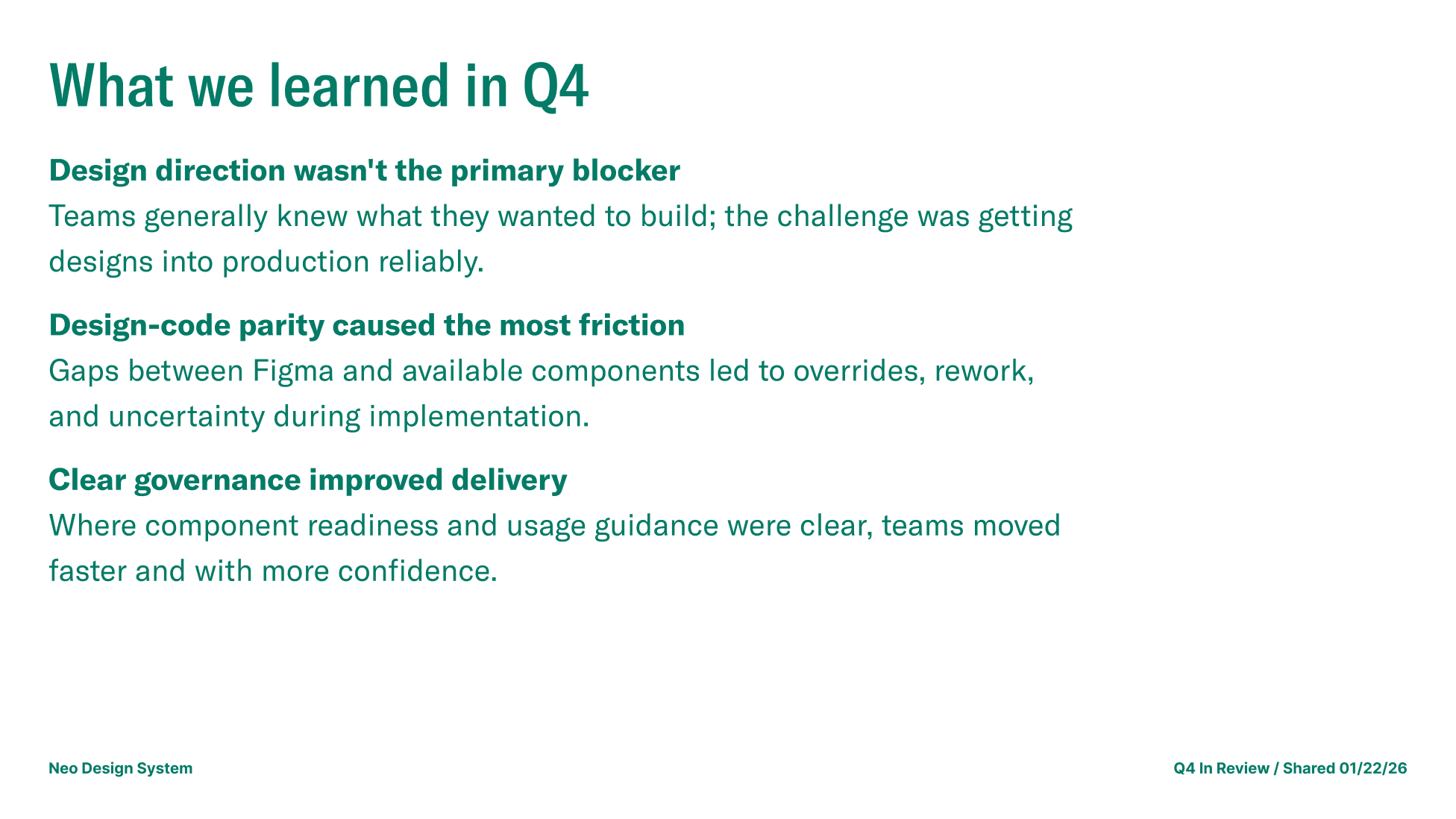
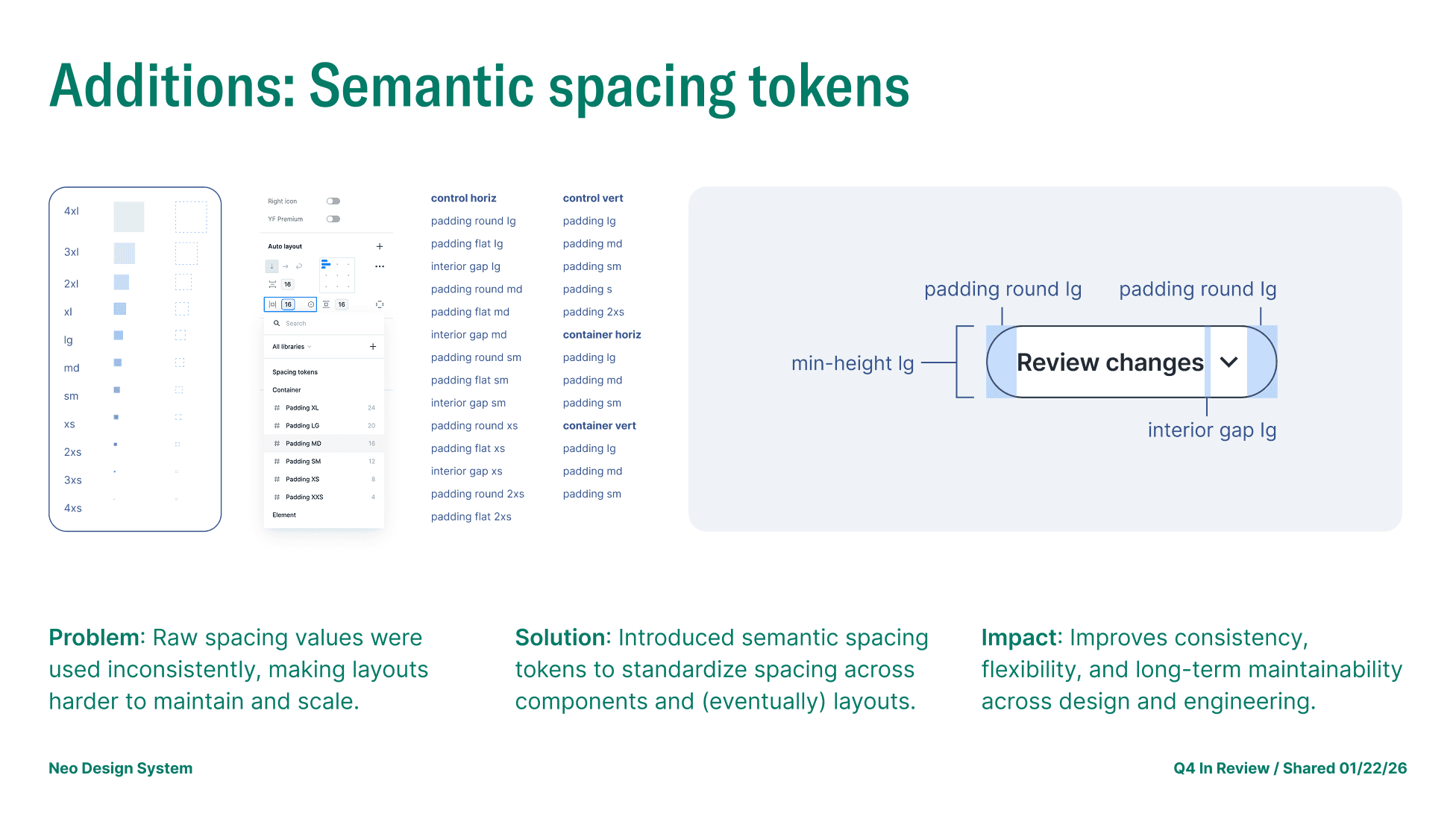
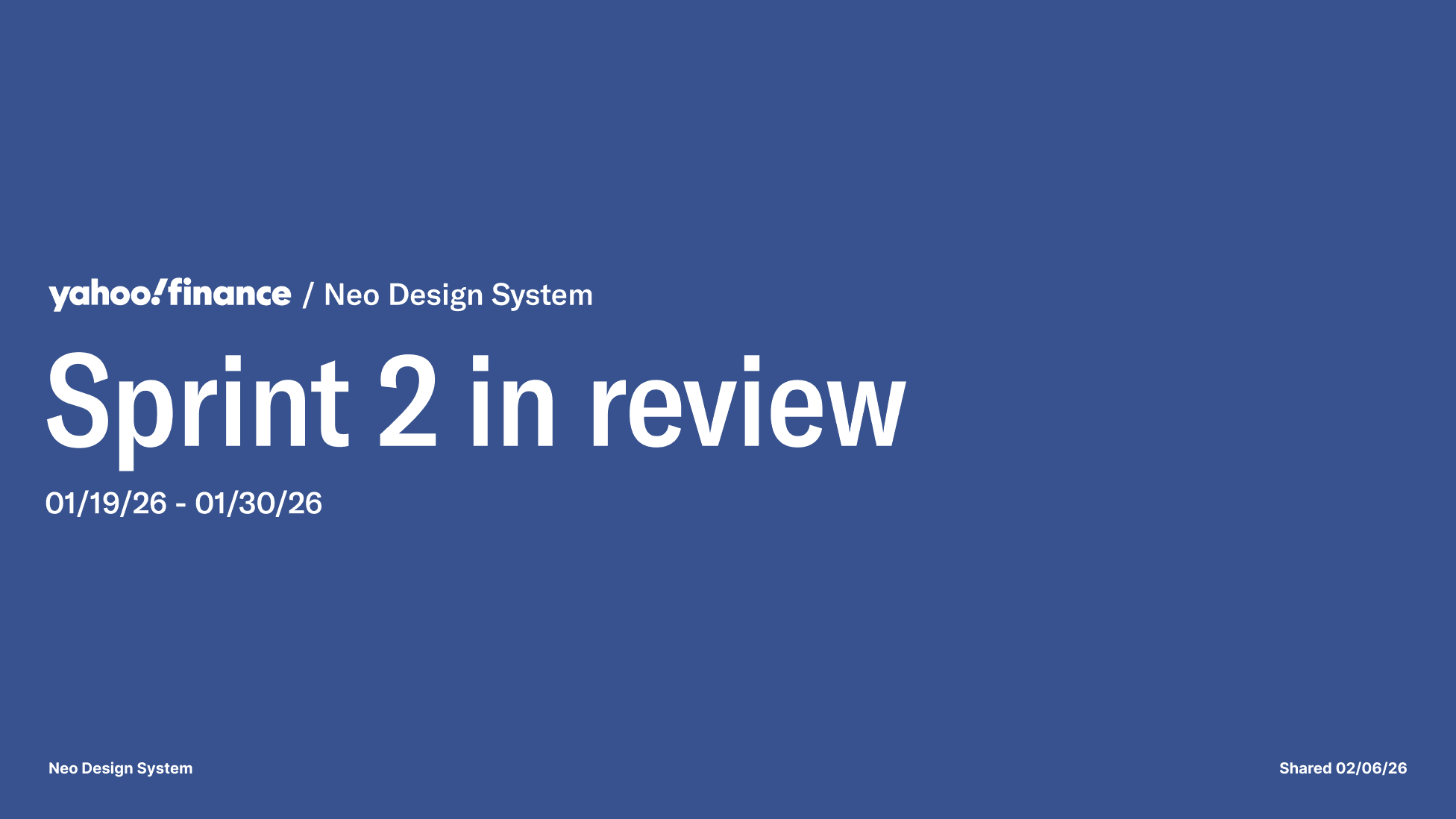
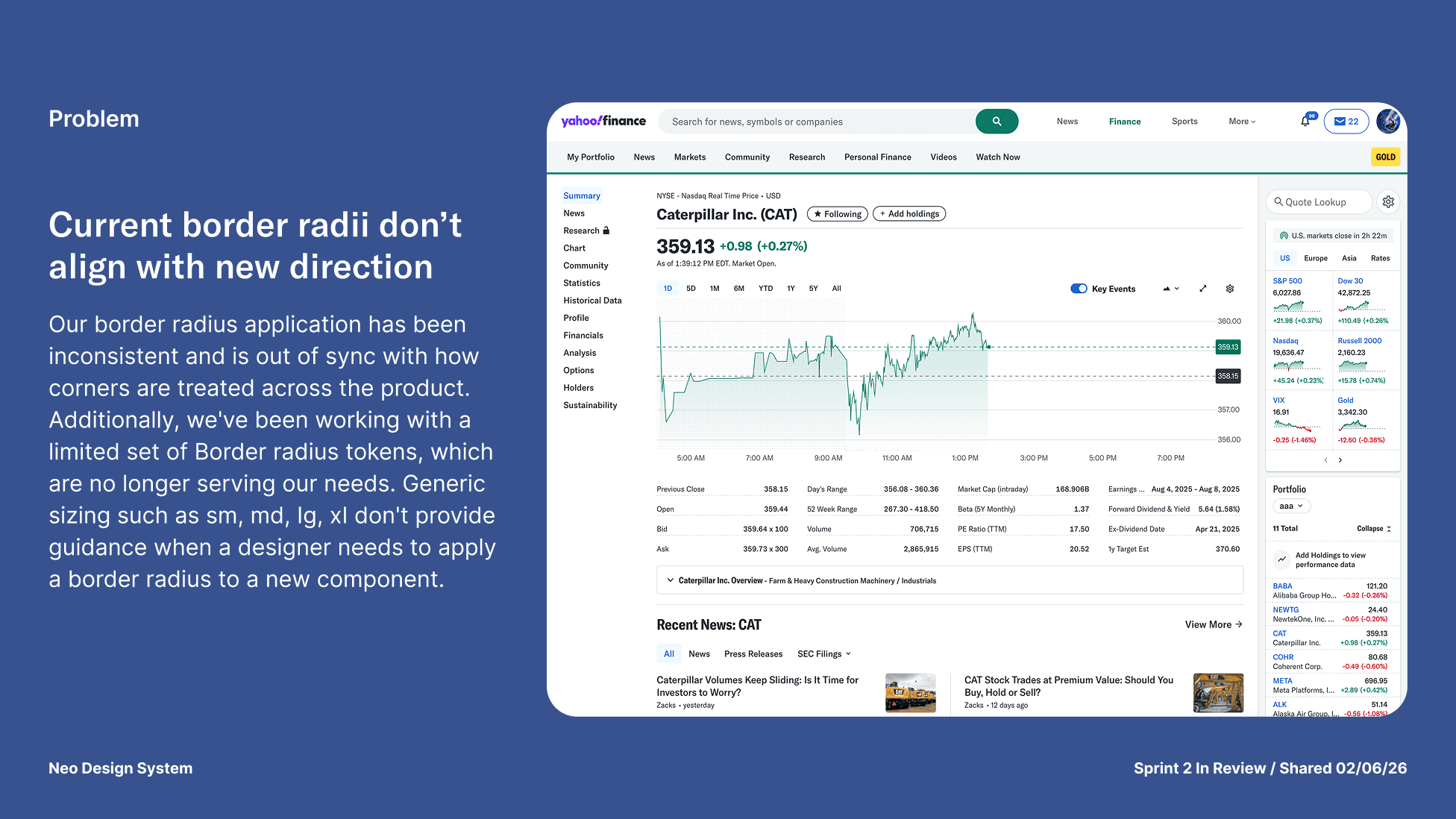
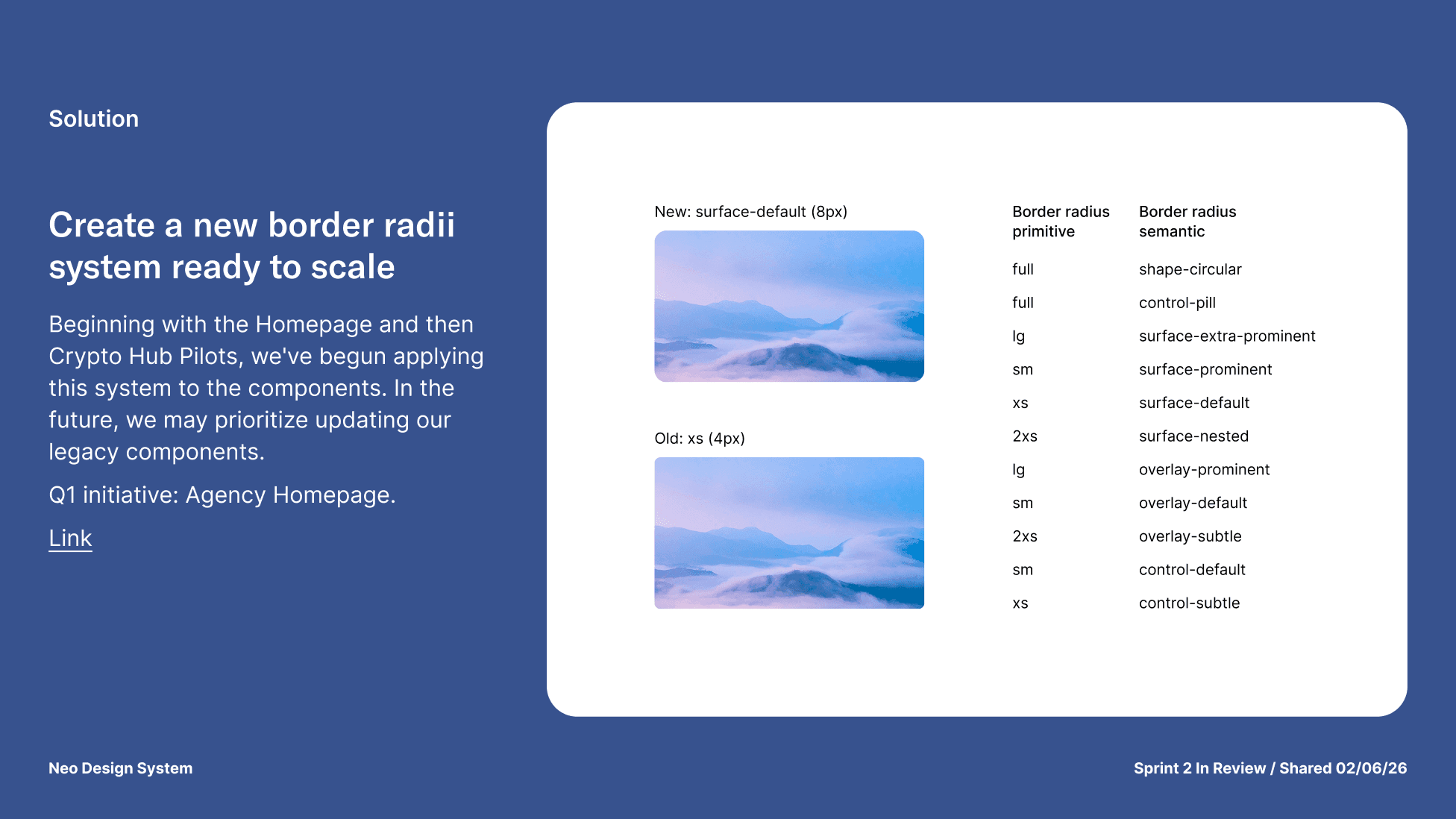
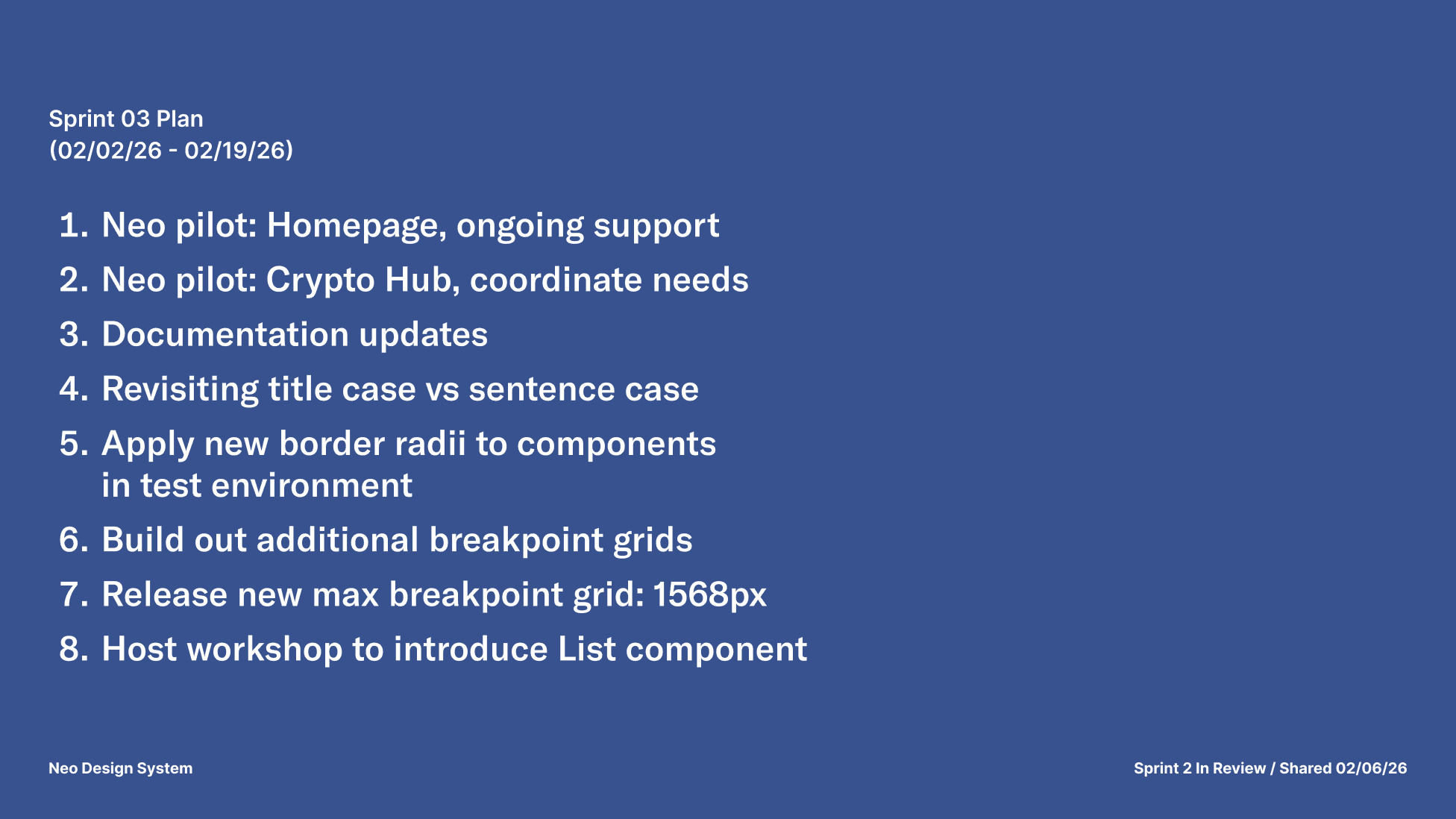
Between quarterly reviews, I published a sprint update every two weeks. The format was consistent: what we worked on, what shipped, what was next, and anything teams needed to know before the next update. It was short by design. The goal was to keep the org informed without adding to anyone's reading load.
Over a full year those updates added up to something more than a log. They became a record of how the system grew, what problems surfaced, and how the team responded. That continuity was useful in its own right — new team members could get up to speed, leadership could see the arc of the work, and no one had to rely on tribal knowledge to understand where the system stood.
The sprint update
Between quarterly reviews, I published a sprint update every two weeks. The format was consistent: what we worked on, what shipped, what was next, and anything teams needed to know before the next update. It was short by design. The goal was to keep the org informed without adding to anyone's reading load.
Over a full year those updates added up to something more than a log. They became a record of how the system grew, what problems surfaced, and how the team responded. That continuity was useful in its own right — new team members could get up to speed, leadership could see the arc of the work, and no one had to rely on tribal knowledge to understand where the system stood.
All the tools
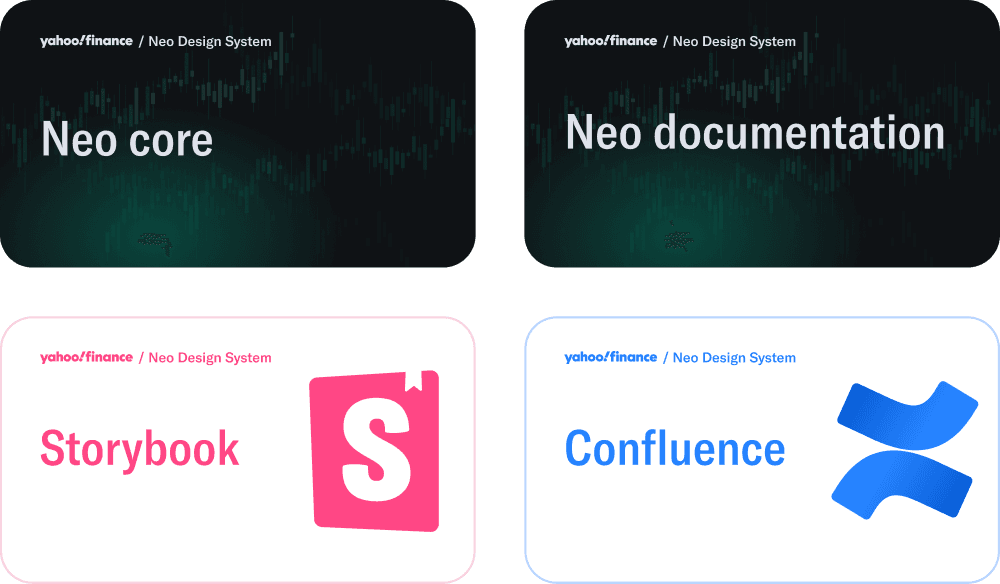
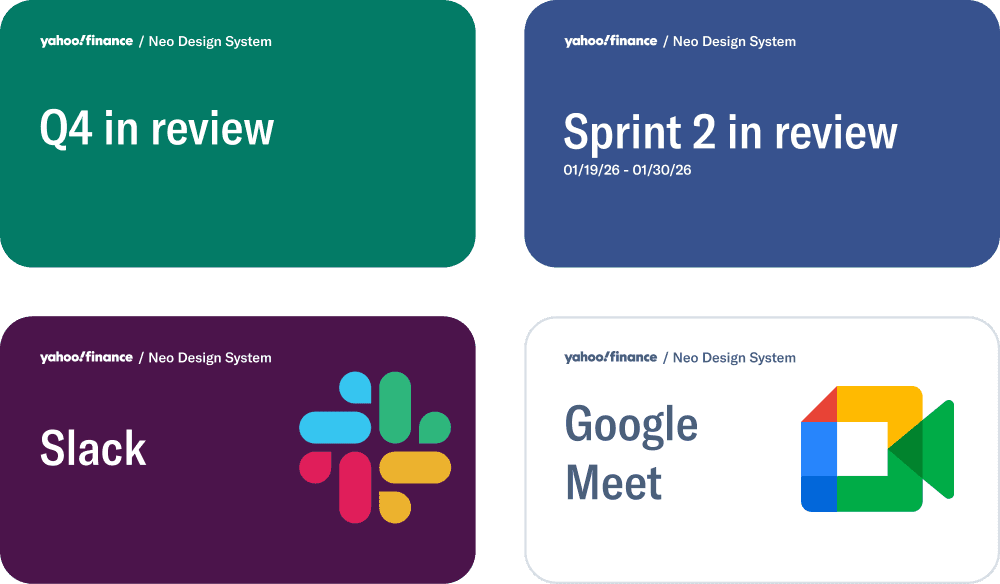
There were two kinds of work happening at the same time. One was building and documenting the system: keeping Neo core accurate, Storybook in sync with Figma, Confluence updated with guidance teams could actually use. That work created the sources of truth. The other was making sure people knew those sources of truth existed and understood how to use them, through sprint decks, quarterly reviews, a Slack channel, and more five-minute video calls than I can count.
Neither half works without the other. A perfectly documented system that nobody knows about fails just as quietly as an undocumented one.

Sources of truth
All the tools
There were two kinds of work happening at the same time. One was building and documenting the system: keeping Neo core accurate, Storybook in sync with Figma, Confluence updated with guidance teams could actually use. That work created the sources of truth. The other was making sure people knew those sources of truth existed and understood how to use them, through sprint decks, quarterly reviews, a Slack channel, and more five-minute video calls than I can count.
Neither half works without the other. A perfectly documented system that nobody knows about fails just as quietly as an undocumented one.
Sources of truth

Communication layer
Communication layer
Why this matters
Design systems work fails quietly. Teams stop adopting. Engineers work around components. Designers maintain their own files. Nobody announces it — it just happens, gradually, until the system is a legacy artifact that everyone tolerates and nobody trusts.
Consistent communication is one of the things that prevents that. Not because updates are inherently valuable, but because they signal that the system is alive, that someone is paying attention, and that the work is worth depending on.
Related
Communication was how six squads stayed aligned while this was being built.
Related
Communication was how six squads stayed aligned while this was being built.
Related
Communication was how six squads stayed aligned while this was being built.
Related
Communication was how six squads stayed aligned while this was being built.
©2026 Drew Marshall. Site designed and built by yours truly (+ Claude)
Type set in Mori and Fraktion by Mat Desjardins and Pangram Pangram,
Slow Death by Ayyara Letterindo, IM Fell English by Igino Marini
Grid lines
Dark mode
Metal mode
.
©2026 Drew Marshall. Site designed and built by yours truly (+ Claude)
Type set in Mori and Fraktion by Mat Desjardins and Pangram Pangram,
Slow Death by Ayyara Letterindo, IM Fell English by Igino Marini
Grid lines
Dark mode
Metal mode
.
©2026 Drew Marshall. Site designed and built by yours truly (+ Claude)
Type set in Mori and Fraktion by Mat Desjardins and Pangram Pangram,
Slow Death by Ayyara Letterindo, IM Fell English by Igino Marini
Grid lines
Dark mode
Metal mode
.
©2026 Drew Marshall. Site designed and built by yours truly (+ Claude)
Type set in Mori and Fraktion by Mat Desjardins and Pangram Pangram,
Slow Death by Ayyara Letterindo, IM Fell English by Igino Marini
Grid lines
Dark mode
Metal mode
.