/ Neo Design System
Stakeholder alignment
Component design
Token architecture
Documentation
Communication
Engineering coordination
Yahoo Finance / Senior Product Designer / 2023 to 2026
Where things stood
When I joined Yahoo Finance, design was happening across six squads with no shared foundation. Designers maintained their own component files. Engineers built from scratch or borrowed inconsistently from each other. There were shared files, but no real system. Just tribal knowledge held together by habit.
/ Neo Design System
Stakeholder alignment
Component design
Token architecture
Documentation
Communication
Engineering coordination
Yahoo Finance / Senior Product Designer / 2023 to 2026
Where things stood
When I joined Yahoo Finance, design was happening across six squads with no shared foundation. Designers maintained their own component files. Engineers built from scratch or borrowed inconsistently from each other. There were shared files, but no real system. Just tribal knowledge held together by habit.
/ Neo Design System
Stakeholder alignment
Component design
Token architecture
Documentation
Communication
Engineering coordination
Yahoo Finance / Senior Product Designer / 2023 to 2026
Where things stood
When I joined Yahoo Finance, design was happening across six squads with no shared foundation. Designers maintained their own component files. Engineers built from scratch or borrowed inconsistently from each other. There were shared files, but no real system. Just tribal knowledge held together by habit.
/ Neo Design System
Stakeholder alignment
Component design
Token architecture
Documentation
Communication
Engineering coordination
Yahoo Finance / Senior Product Designer / 2023 to 2026
Where things stood
When I joined Yahoo Finance, design was happening across six squads with no shared foundation. Designers maintained their own component files. Engineers built from scratch or borrowed inconsistently from each other. There were shared files, but no real system. Just tribal knowledge held together by habit.
Fast forward to today. A well-functioning design system:
Fast forward to today.
A well-functioning design system:
100%
100%
of designers got the support they needed without being blocked
54.5%
54.5%
of engineers said implementation was 50% faster with Neo*
81.8%
81.8%
of engineers said work would have been slower or riskier without Neo*
* From the Q4 2025 review of designers, product managers, and engineers across the team.
The first real decision
Before building a single component, I had to answer one question: ship early and messy, or wait until the system was ready?
I chose early. A UI kit first, incomplete by design. Designers adopted it immediately because it solved a real problem they had that week. That early traction meant that when we needed to introduce tokens, refactor components, or expand to native, we weren't asking teams to adopt something new. We were improving something they already depended on.
A more complete system released later would have faced a harder adoption problem. This one didn't.
The first real decision
Before building a single component, I had to answer one question: ship early and messy, or wait until the system was ready?
I chose early. A UI kit first, incomplete by design. Designers adopted it immediately because it solved a real problem they had that week. That early traction meant that when we needed to introduce tokens, refactor components, or expand to native, we weren't asking teams to adopt something new. We were improving something they already depended on.
A more complete system released later would have faced a harder adoption problem. This one didn't.
The first real decision
Before building a single component, I had to answer one question: ship early and messy, or wait until the system was ready?
I chose early. A UI kit first, incomplete by design. Designers adopted it immediately because it solved a real problem they had that week. That early traction meant that when we needed to introduce tokens, refactor components, or expand to native, we weren't asking teams to adopt something new. We were improving something they already depended on.
A more complete system released later would have faced a harder adoption problem. This one didn't.
What Neo became
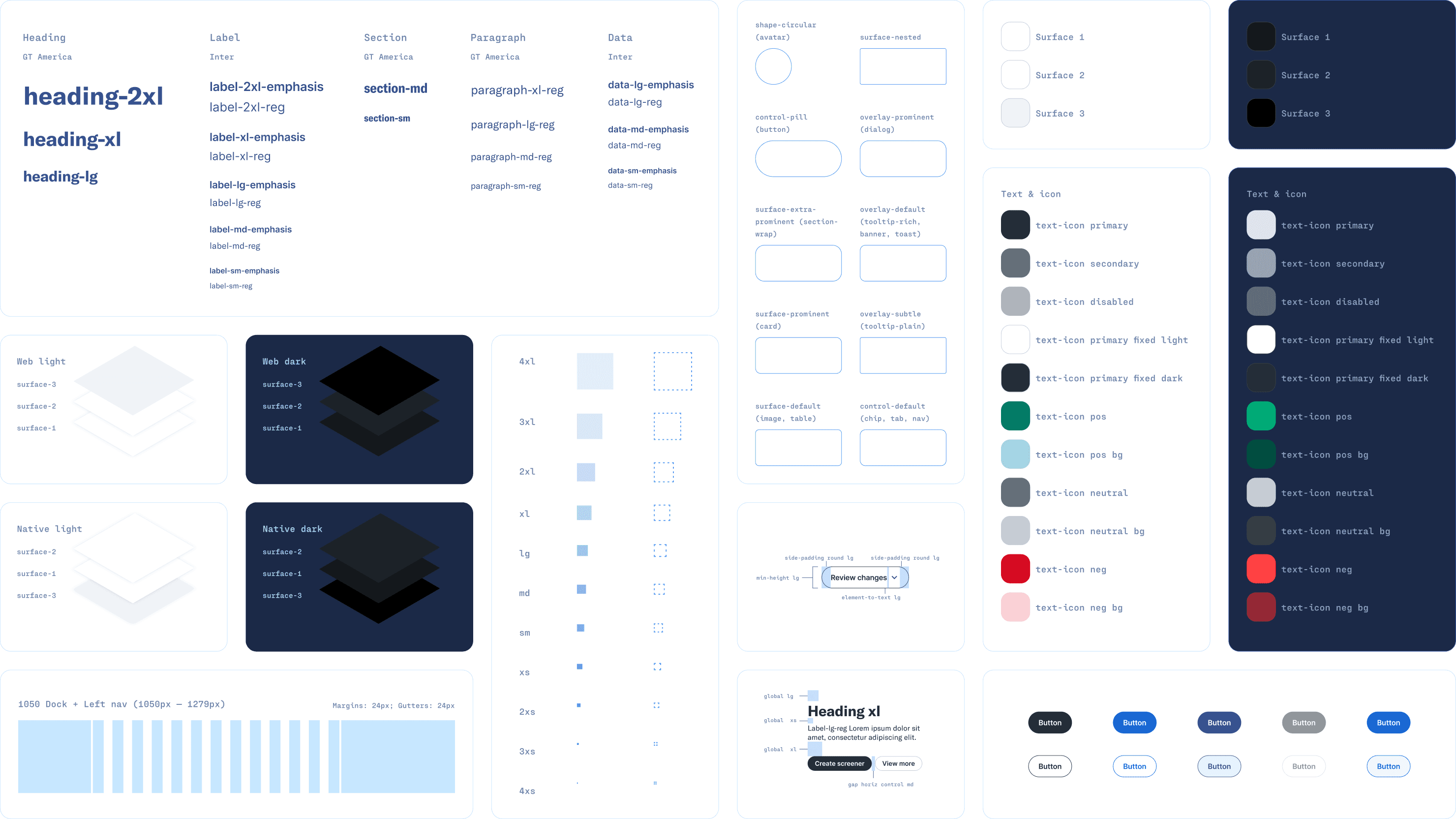
Over multiple years, Neo grew into a comprehensive system covering Yahoo Finance desktop web, mobile web, iOS, and Android.
The full system included a Figma component library, a coded component library in parity with it, and a documentation prototype serving as a living reference for both designers and engineers. The token architecture was set up early and deliberately. Not because dark mode was on the roadmap, but because I knew it was coming.
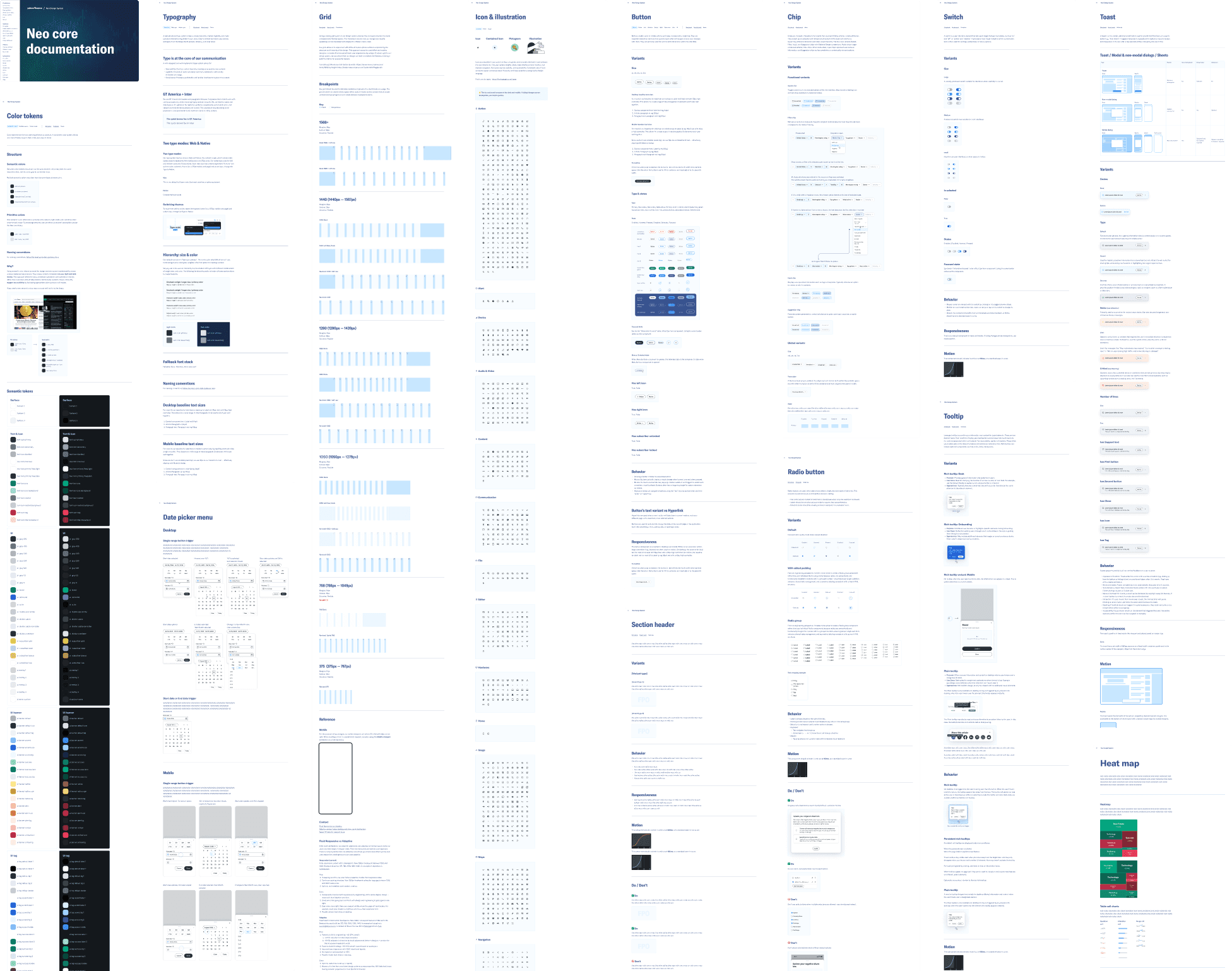
Pages from the documentation site
What Neo became
Over multiple years, Neo grew into a comprehensive system covering Yahoo Finance desktop web, mobile web, iOS, and Android.
The full system included a Figma component library, a coded component library in parity with it, and a documentation prototype serving as a living reference for both designers and engineers. The token architecture was set up early and deliberately. Not because dark mode was on the roadmap, but because I knew it was coming.
Pages from the documentation site
What Neo became
Over multiple years, Neo grew into a comprehensive system covering Yahoo Finance desktop web, mobile web, iOS, and Android.
The full system included a Figma component library, a coded component library in parity with it, and a documentation prototype serving as a living reference for both designers and engineers. The token architecture was set up early and deliberately. Not because dark mode was on the roadmap, but because I knew it was coming.
Pages from the documentation site
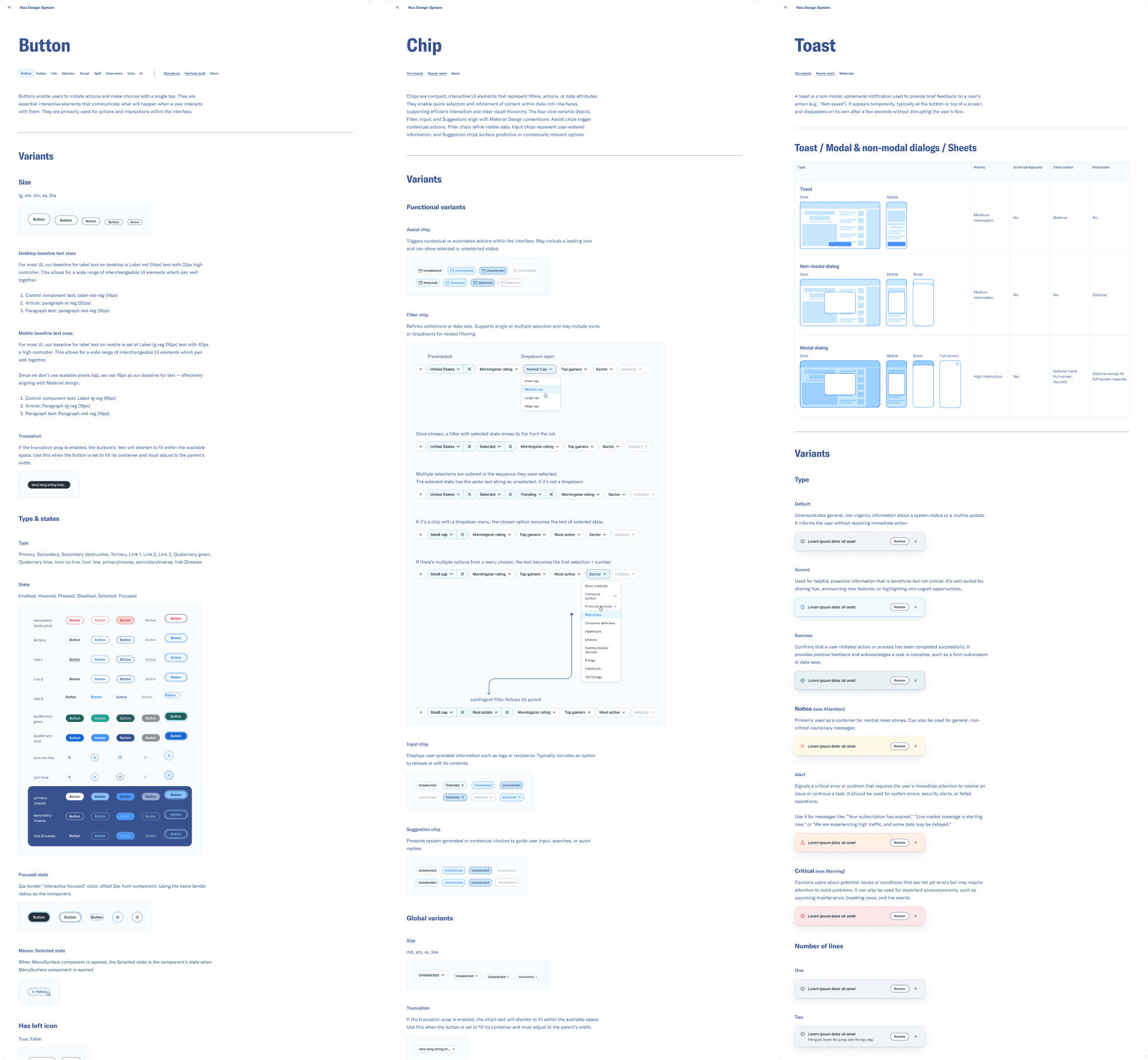
Pages from the documentation site
Pages from the documentation site
Building with engineering, not around them
Engineering was indifferent at the start. They wanted product shipped. I didn't pitch a vision. I just helped the engineers dealing with the most friction and let usefulness do the persuading.
A federated engineering model didn't hold. The incentives didn't align. We moved to a small dedicated systems team, which gave Neo the focused ownership it needed to stay consistent and grow.
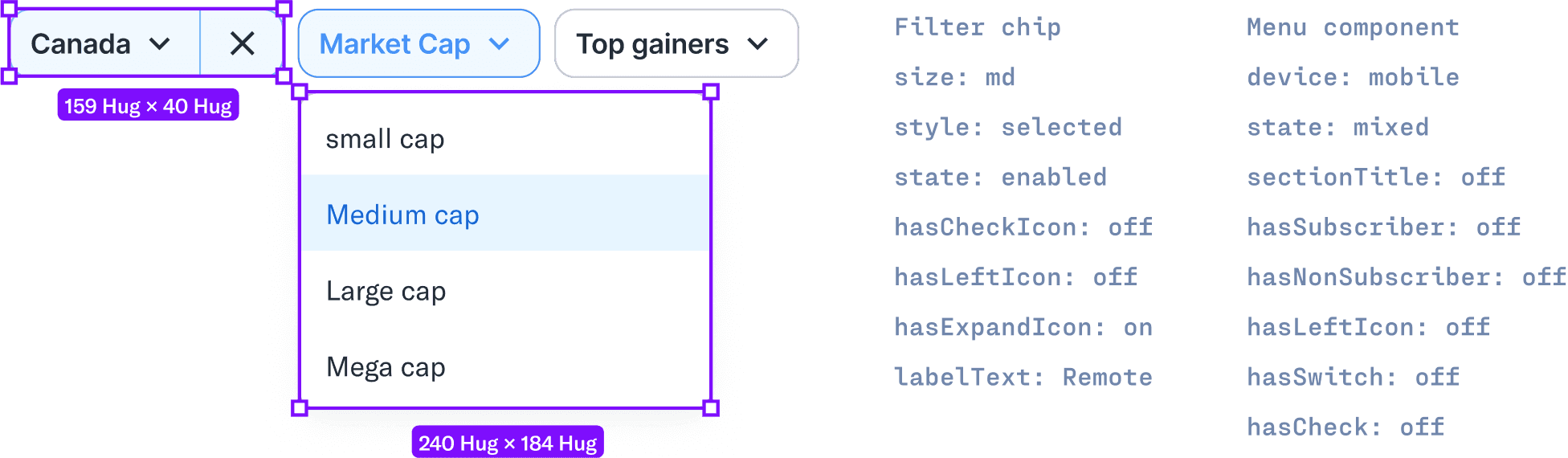
Props for the filter chip and menu components
Building with engineering, not around them
Engineering was indifferent at the start. They wanted product shipped. I didn't pitch a vision. I just helped the engineers dealing with the most friction and let usefulness do the persuading.
A federated engineering model didn't hold. The incentives didn't align. We moved to a small dedicated systems team, which gave Neo the focused ownership it needed to stay consistent and grow.
Props for the filter chip and menu components
Building with engineering, not around them
Engineering was indifferent at the start. They wanted product shipped. I didn't pitch a vision. I just helped the engineers dealing with the most friction and let usefulness do the persuading.
A federated engineering model didn't hold. The incentives didn't align. We moved to a small dedicated systems team, which gave Neo the focused ownership it needed to stay consistent and grow.
Props for the filter chip and menu components
Built in public
Neo was built while the product was shipping. The whole org needed to know what existed, what was coming, and what was safe to depend on. Communication wasn't a side project. It was the work that made the rest of the work stick.
Props for the filter chip and menu components
Built in public
Neo was built while the product was shipping. The whole org needed to know what existed, what was coming, and what was safe to depend on. Communication wasn't a side project. It was the work that made the rest of the work stick.
Props for the filter chip and menu components
Built in public
Neo was built while the product was shipping. The whole org needed to know what existed, what was coming, and what was safe to depend on. Communication wasn't a side project. It was the work that made the rest of the work stick.
Props for the filter chip and menu components
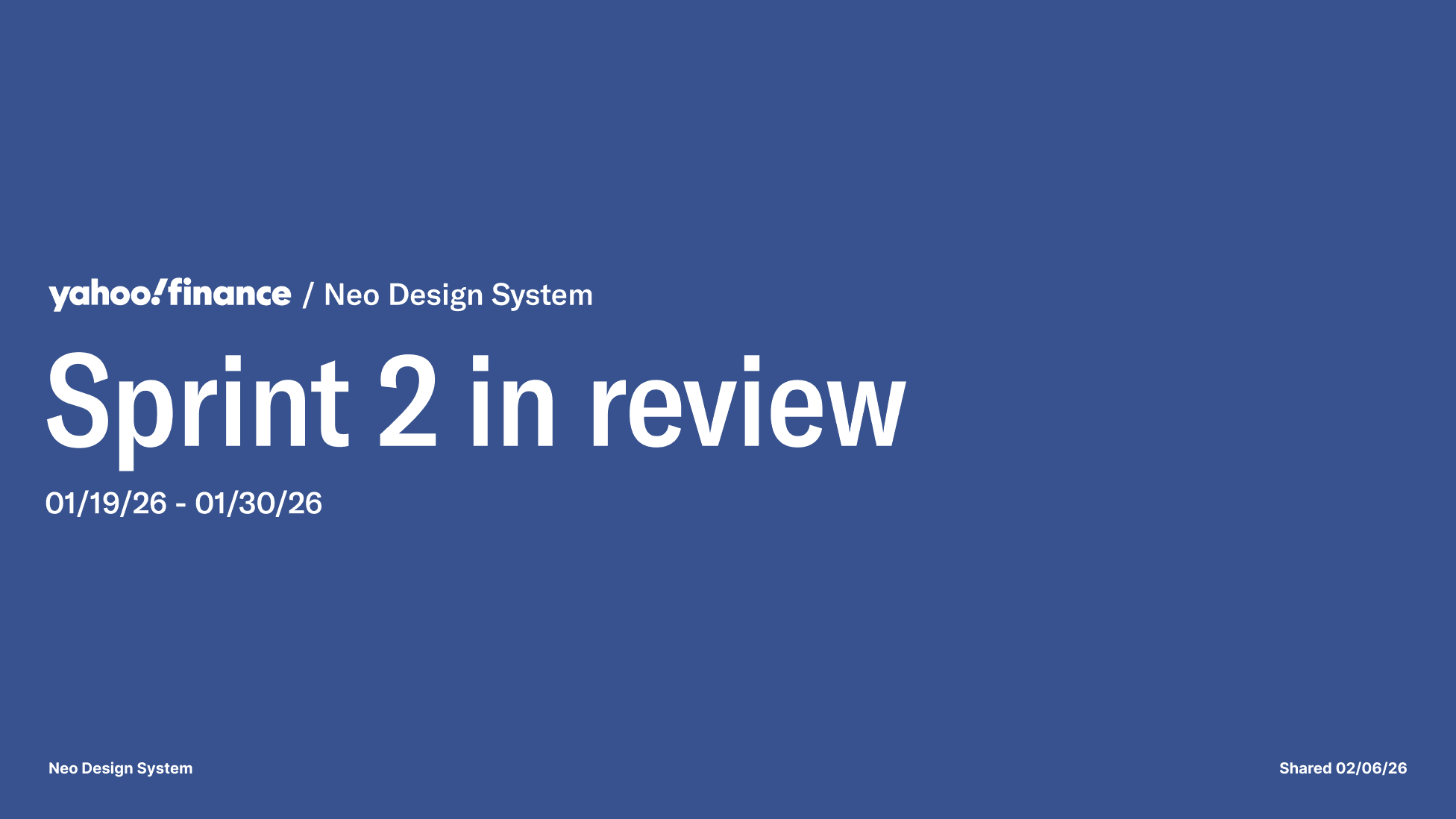
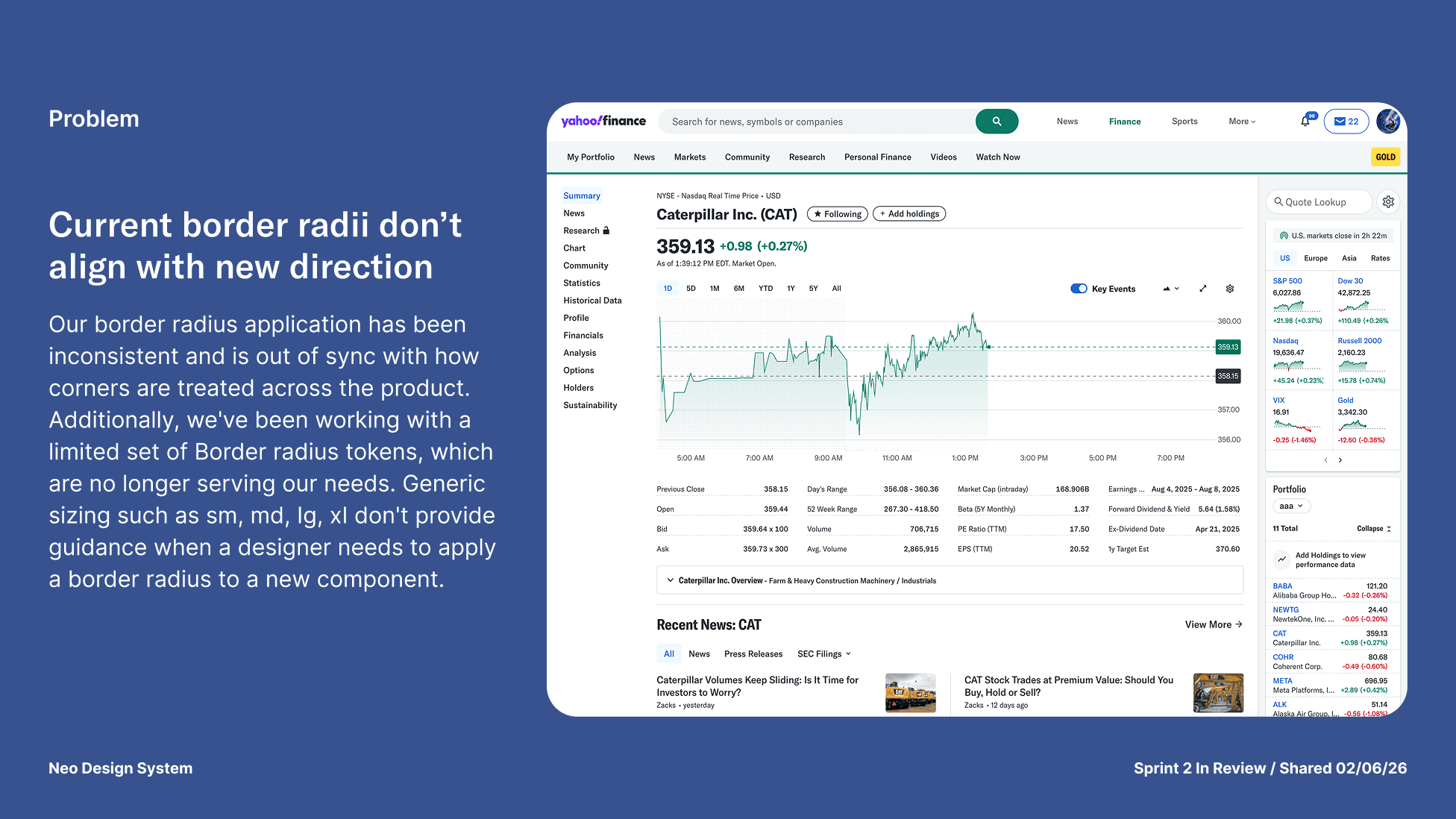
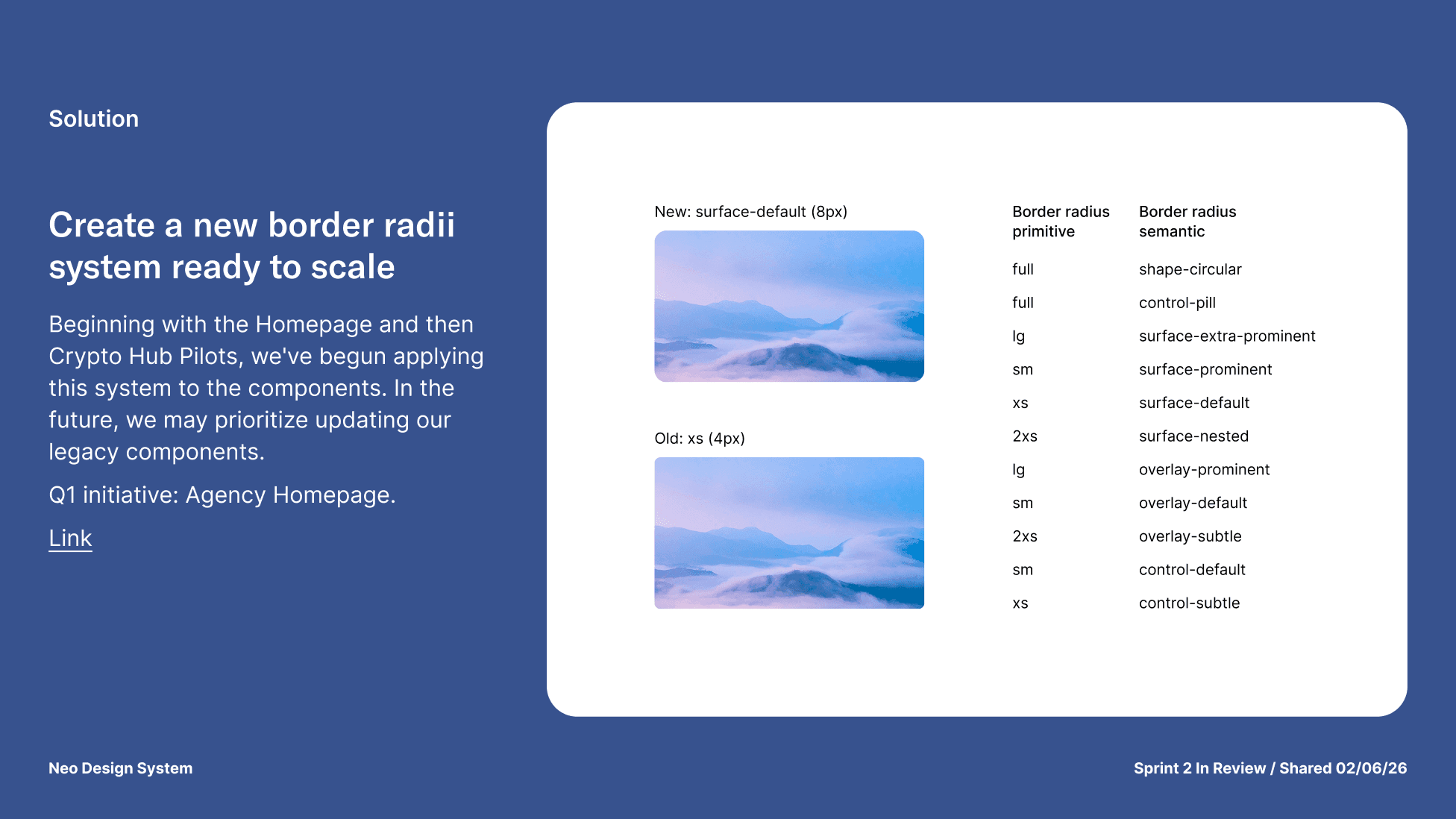
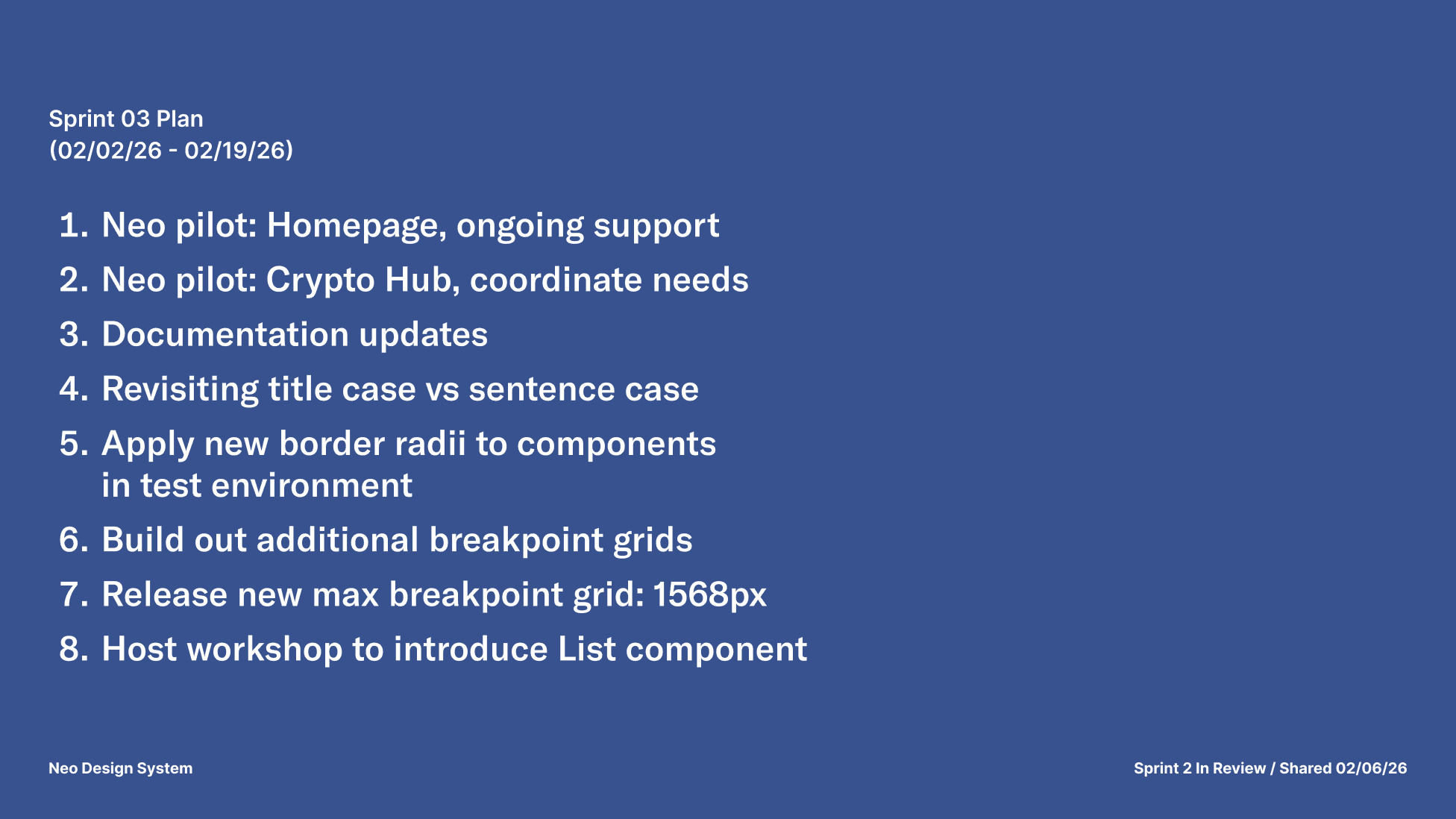
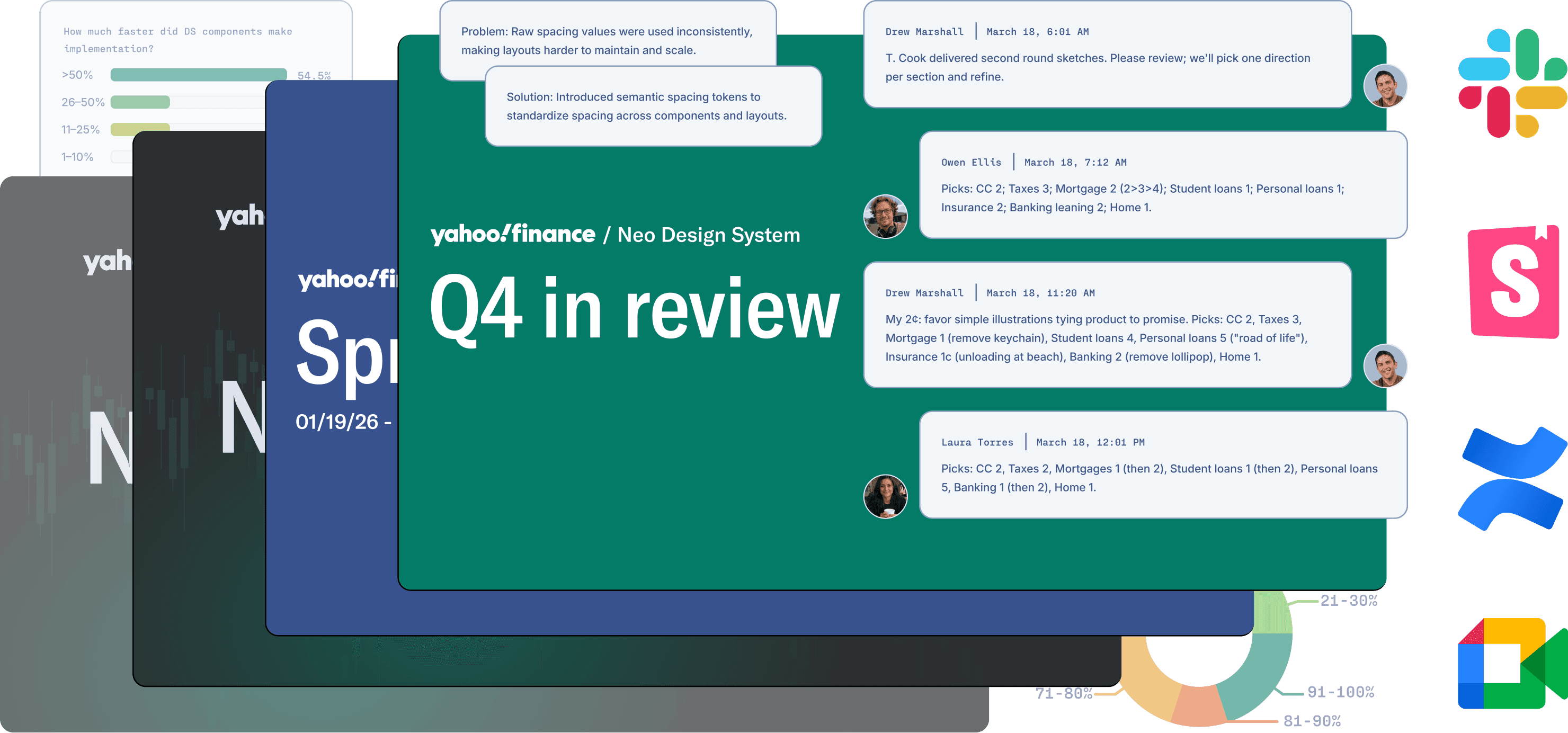
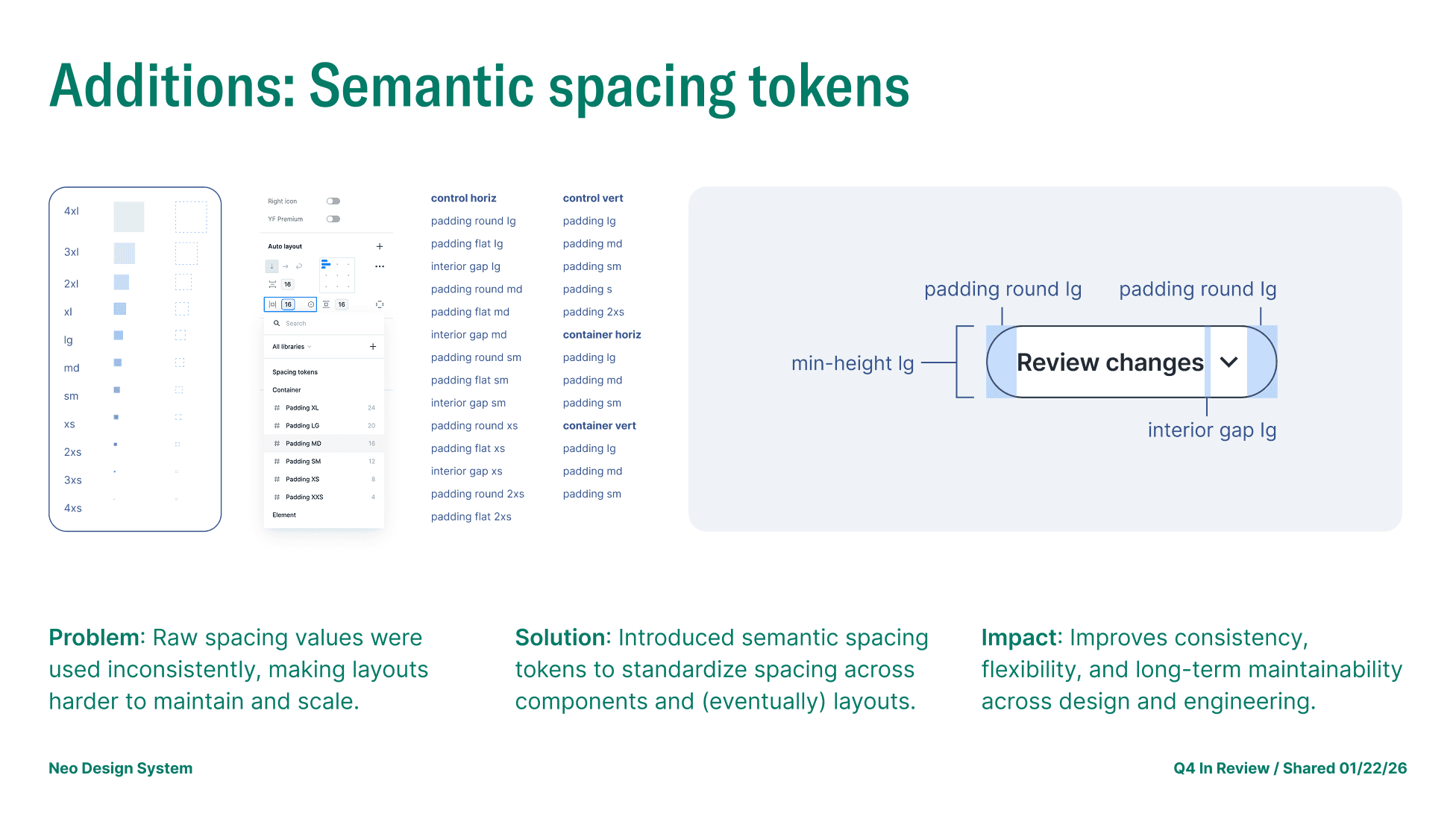
Example pages from a "Sprint in review" deck
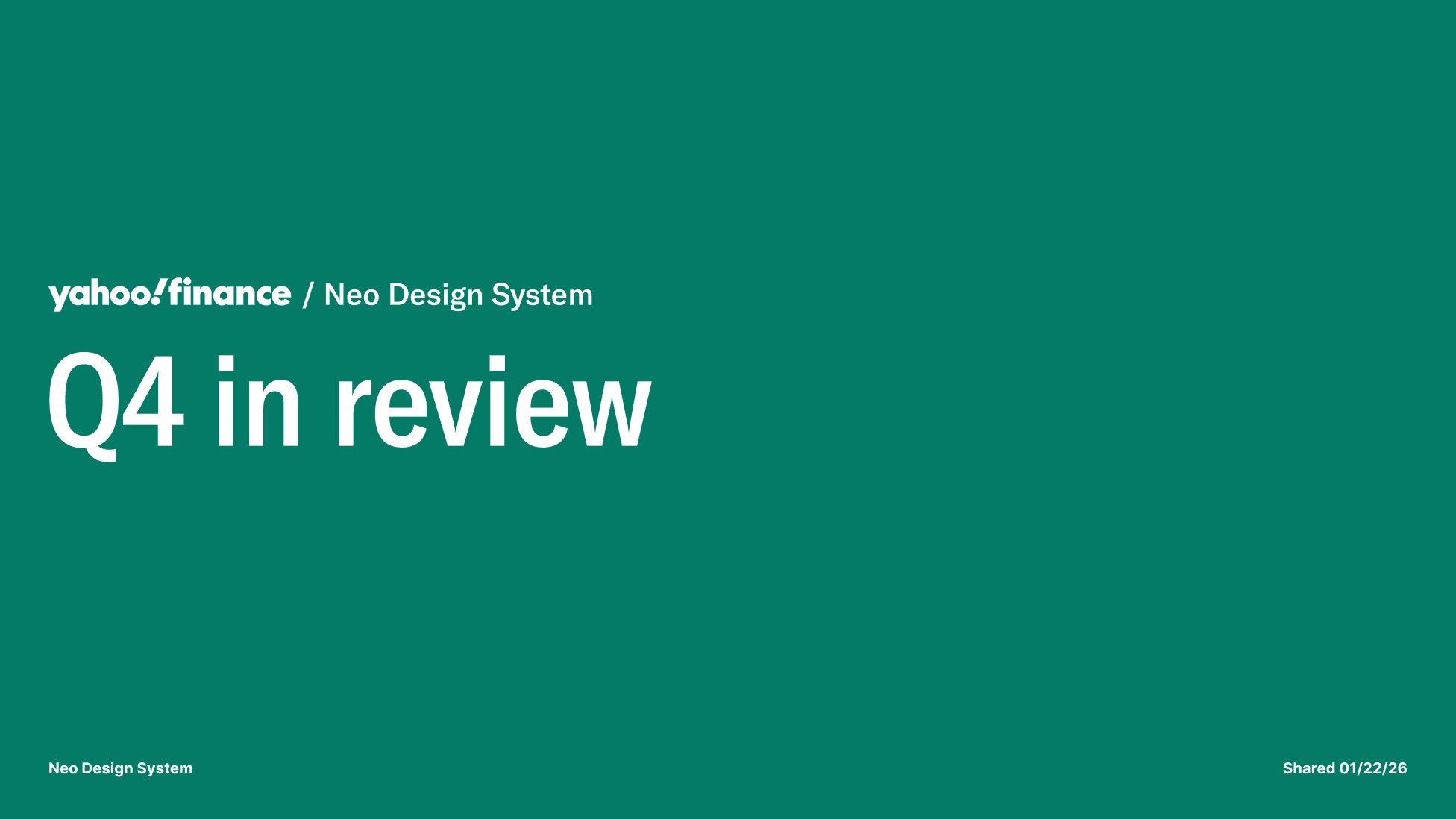
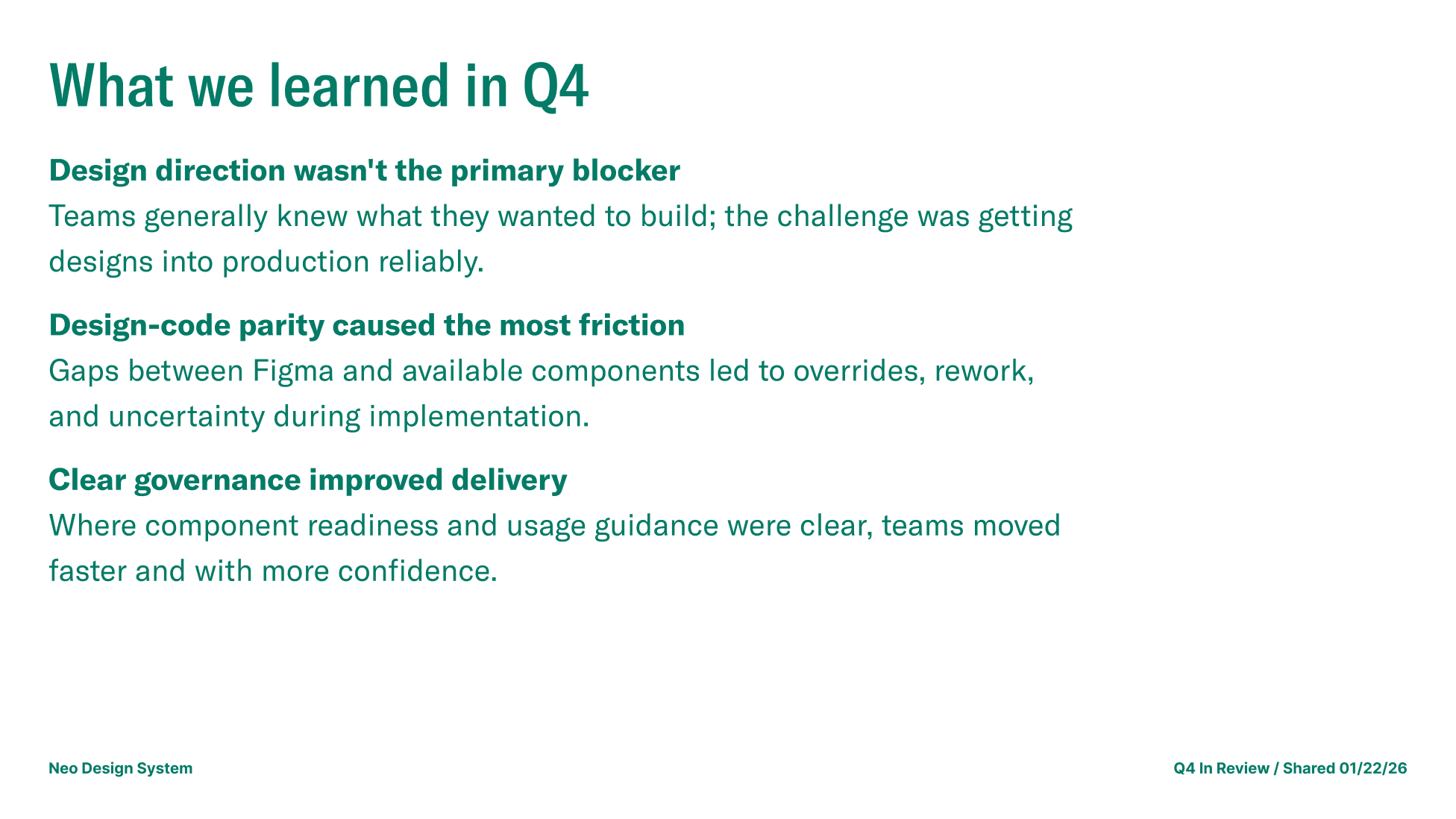
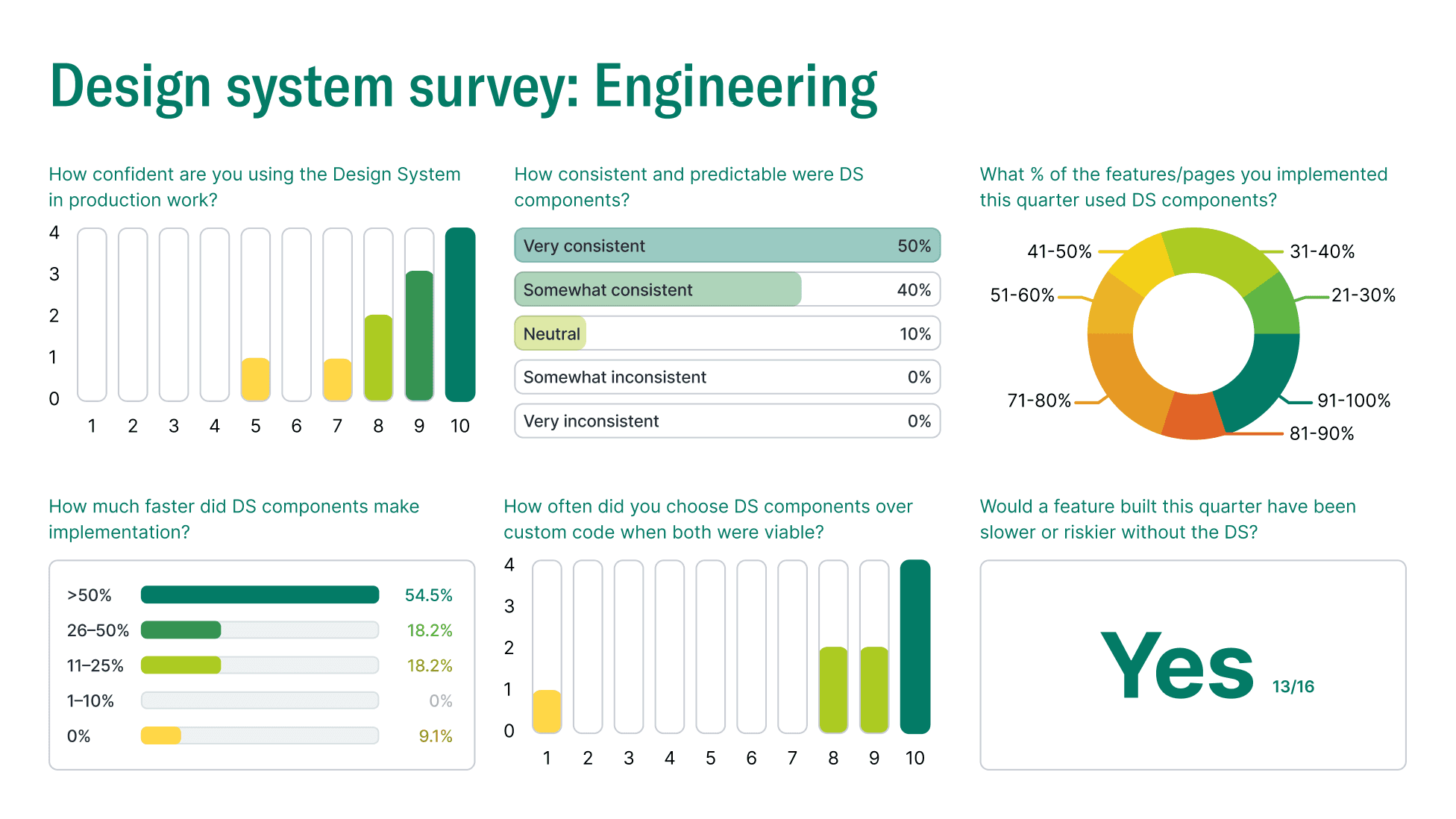
Example pages from the "Quarterly review" deck
Every two weeks, a sprint update. Every quarter, a longer review with what shipped, the data on adoption, feedback from designers, engineers, and PMs, and what was coming next. The Q4 2025 review surveyed three groups. The numbers further down didn't come from nowhere. They came from a team that knew what the system was doing because we told them, all year.
Every two weeks, a sprint update. Every quarter, a longer review with what shipped, the data on adoption, feedback from designers, engineers, and PMs, and what was coming next. The Q4 2025 review surveyed three groups. The numbers further down didn't come from nowhere. They came from a team that knew what the system was doing because we told them, all year.
Every two weeks, a sprint update. Every quarter, a longer review with what shipped, the data on adoption, feedback from designers, engineers, and PMs, and what was coming next. The Q4 2025 review surveyed three groups. The numbers further down didn't come from nowhere. They came from a team that knew what the system was doing because we told them, all year.

Communication layer
Communication layer

Sources of truth
Sources of truth
Sources of truth
A system stress test
Neo scaled in directions it was never designed for. Heavily leaning on dark mode, we built a terminal experience aligning 90% to the core intent. It diverged where the terminal experience demanded it. Those new patterns, chart toolbars, card headers, and new button variants, were eventually folded back into Neo. That two-way exchange is a sign of a healthy system.

Alphaspace (on the right) is built with 96% Neo tokens and components.
A system stress test
Neo scaled in directions it was never designed for. Heavily leaning on dark mode, we built a terminal experience aligning 90% to the core intent. It diverged where the terminal experience demanded it. Those new patterns, chart toolbars, card headers, and new button variants, were eventually folded back into Neo. That two-way exchange is a sign of a healthy system.
Alphaspace (on the right) is built with 96% Neo tokens and components.
A system stress test
Neo scaled in directions it was never designed for. Heavily leaning on dark mode, we built a terminal experience aligning 90% to the core intent. It diverged where the terminal experience demanded it. Those new patterns, chart toolbars, card headers, and new button variants, were eventually folded back into Neo. That two-way exchange is a sign of a healthy system.
Alphaspace (on the right) is built with 96% Neo tokens and components.
What the numbers showed
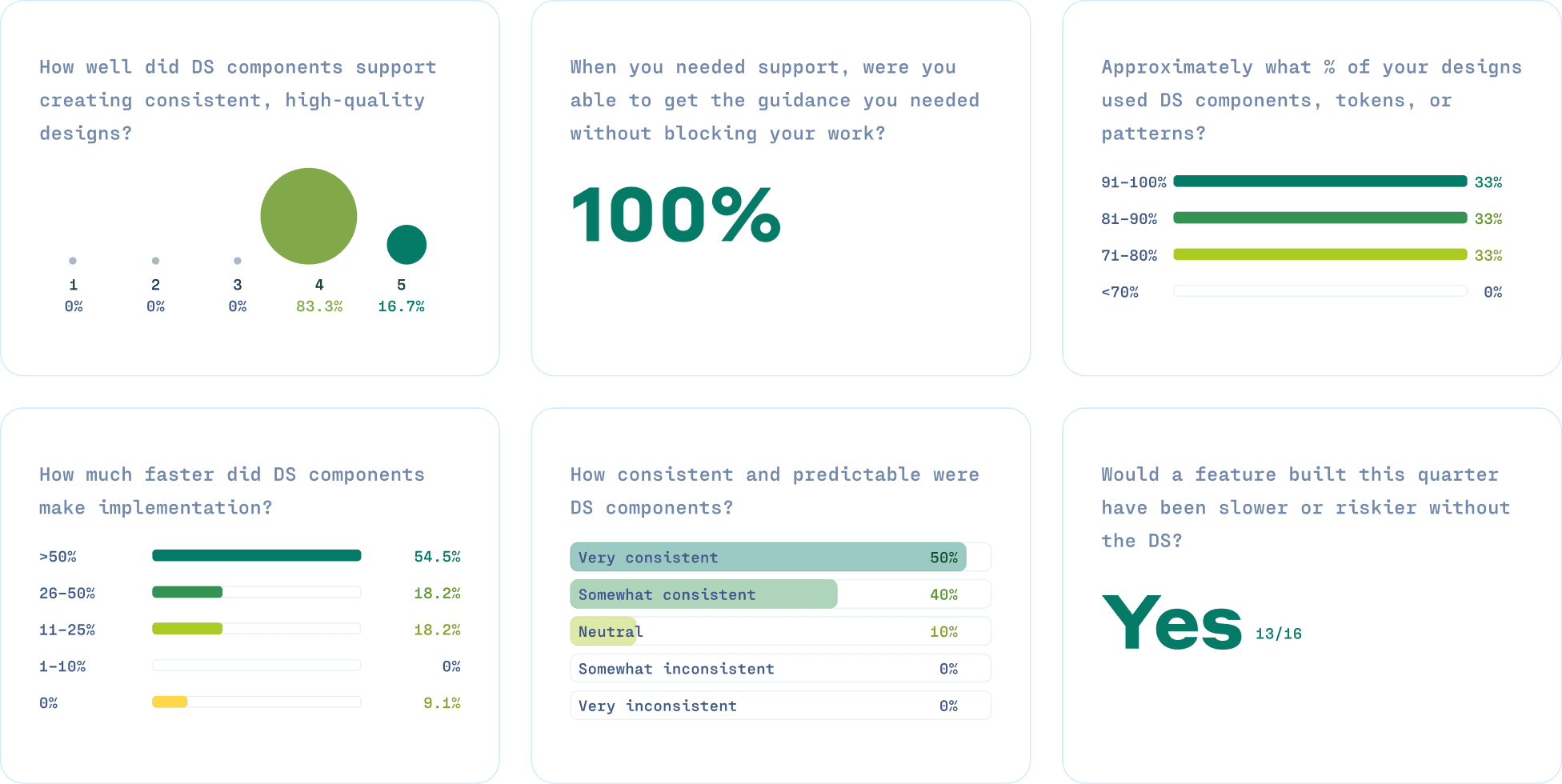
At the end of Q4 we surveyed designers, product managers, and engineers. Every designer could get support without being blocked. Two thirds said Neo saved them 81 to 100 percent of time versus designing from scratch. 54.5% of engineers said it made implementation 50% or more faster. 81.8% said their work that quarter would have been slower or riskier without it.
What the numbers showed
At the end of Q4 we surveyed designers, product managers, and engineers. Every designer could get support without being blocked. Two thirds said Neo saved them 81 to 100 percent of time versus designing from scratch. 54.5% of engineers said it made implementation 50% or more faster. 81.8% said their work that quarter would have been slower or riskier without it.
What the numbers showed
At the end of Q4 we surveyed designers, product managers, and engineers. Every designer could get support without being blocked. Two thirds said Neo saved them 81 to 100 percent of time versus designing from scratch. 54.5% of engineers said it made implementation 50% or more faster. 81.8% said their work that quarter would have been slower or riskier without it.
What people said
"I am very excited that this is now being properly invested in." —Engineering
"Any time we were handed a Figma that did not match our existing design system, it always caused a ton of confusion." —Engineering
"It is great to have such a large repository of existing design and styles to pull from when starting a project." —Design
"Design system is great. The strides are being felt." —Engineering
What people said
"I am very excited that this is now being properly invested in." —Engineering
"Any time we were handed a Figma that did not match our existing design system, it always caused a ton of confusion." —Engineering
"It is great to have such a large repository of existing design and styles to pull from when starting a project." —Design
"Design system is great. The strides are being felt." —Engineering
What people said
"I am very excited that this is now being properly invested in." —Engineering
"Any time we were handed a Figma that did not match our existing design system, it always caused a ton of confusion." —Engineering
"It is great to have such a large repository of existing design and styles to pull from when starting a project." —Design
"Design system is great. The strides are being felt." —Engineering
This is where the other stories start
Dark mode shipped before any other Yahoo property because the token architecture was in place. The visual language overhaul integrated in-product without a fork. Both stories started here.
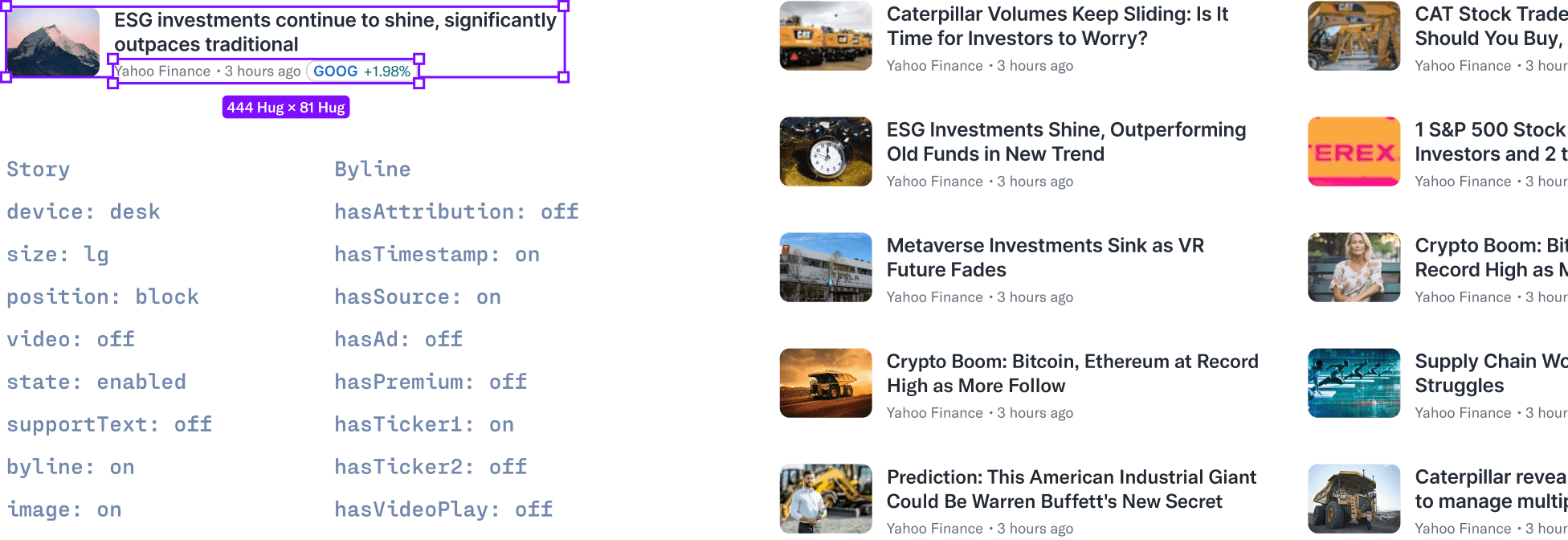
Story component variables and shown with content.
This is where the other stories start
Dark mode shipped before any other Yahoo property because the token architecture was in place. The visual language overhaul integrated in-product without a fork. Both stories started here.
Story component variables and shown with content.
This is where the other stories start
Dark mode shipped before any other Yahoo property because the token architecture was in place. The visual language overhaul integrated in-product without a fork. Both stories started here.
Story component variables and shown with content.
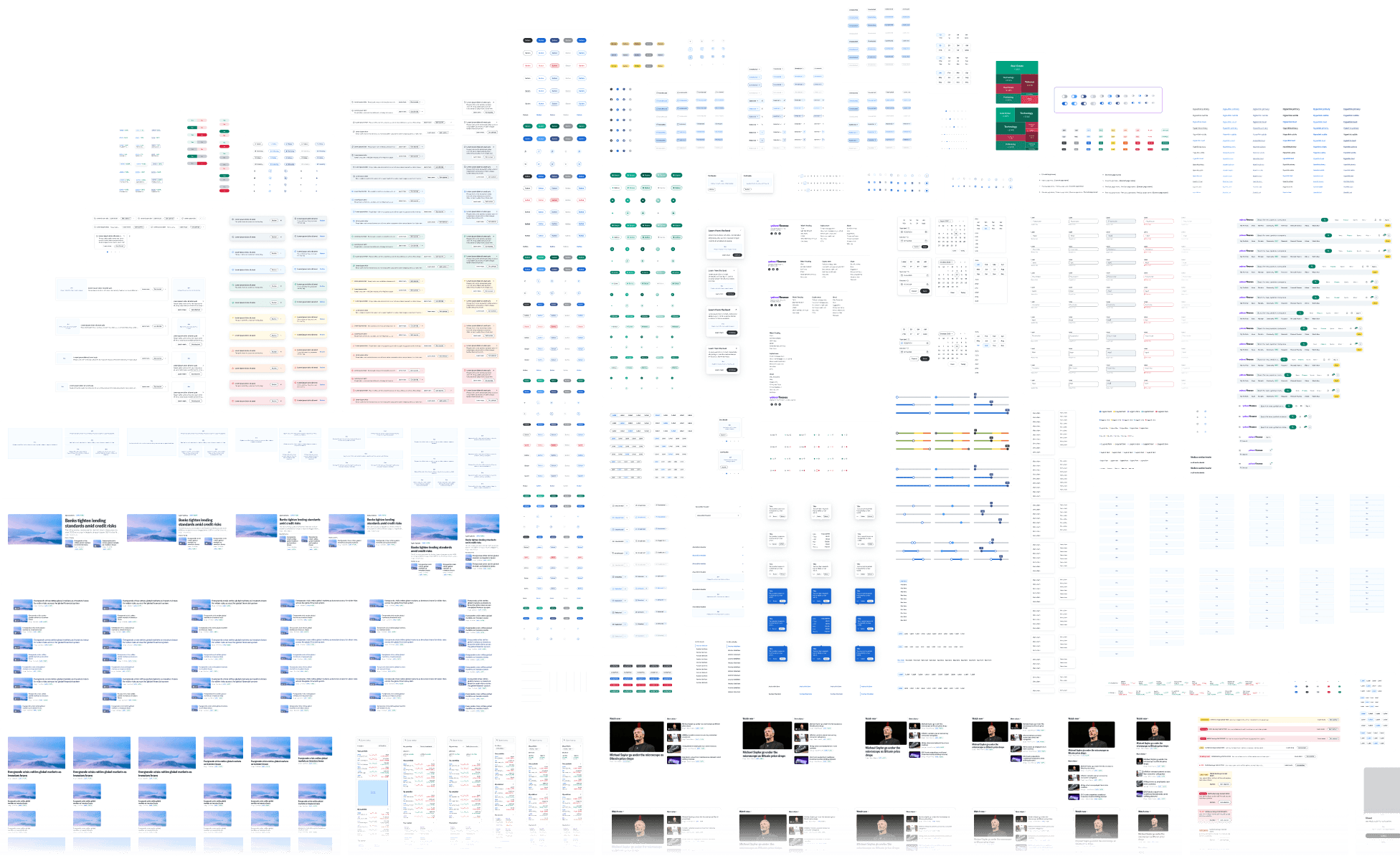
Many, many components
Many, many components
Related
Two stories built on this foundation: one about absorbing a major visual change, one about aligning a team on something subjective.
Related
Two stories built on this foundation: one about absorbing a major visual change, one about aligning a team on something subjective.
Related
Two stories built on this foundation: one about absorbing a major visual change, one about aligning a team on something subjective.
Related
Two stories built on this foundation: one about absorbing a major visual change, one about aligning a team on something subjective.
©2026 Drew Marshall. Site designed and built by yours truly (+ Claude)
Type set in Monument, Mori, and Fraktion by Mat Desjardins and Pangram Pangram,
Slow Death by Ayyara Letterindo, IM Fell English by Igino Marini
Grid lines
Dark mode
Metal mode
.
©2026 Drew Marshall. Site designed and built by yours truly (+ Claude)
Type set in Monument, Mori, and Fraktion by Mat Desjardins and Pangram Pangram,
Slow Death by Ayyara Letterindo, IM Fell English by Igino Marini
Grid lines
Dark mode
Metal mode
.
©2026 Drew Marshall. Site designed and built by yours truly (+ Claude)
Type set in Monument, Mori, and Fraktion by Mat Desjardins and Pangram Pangram,
Slow Death by Ayyara Letterindo, IM Fell English by Igino Marini
Grid lines
Dark mode
Metal mode
.
©2026 Drew Marshall. Site designed and built by yours truly (+ Claude)
Type set in Monument, Mori, and Fraktion by Mat Desjardins and Pangram Pangram,
Slow Death by Ayyara Letterindo, IM Fell English by Igino Marini
Grid lines
Dark mode
Metal mode
.